The humanities at Hopkins offer opportunities to students that are not seen in other programs. Personally, I am a behavioral biology and German double major with a minor in history of science, medicine, and technology. Although I have a lot of experience with the humanities departments here, I think it’s fun and valuable to bounce thoughts with my peers.
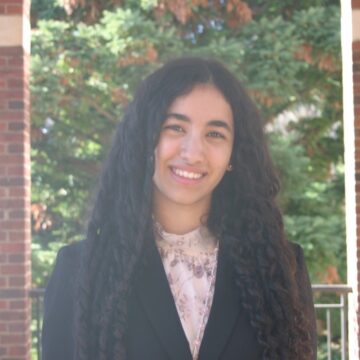
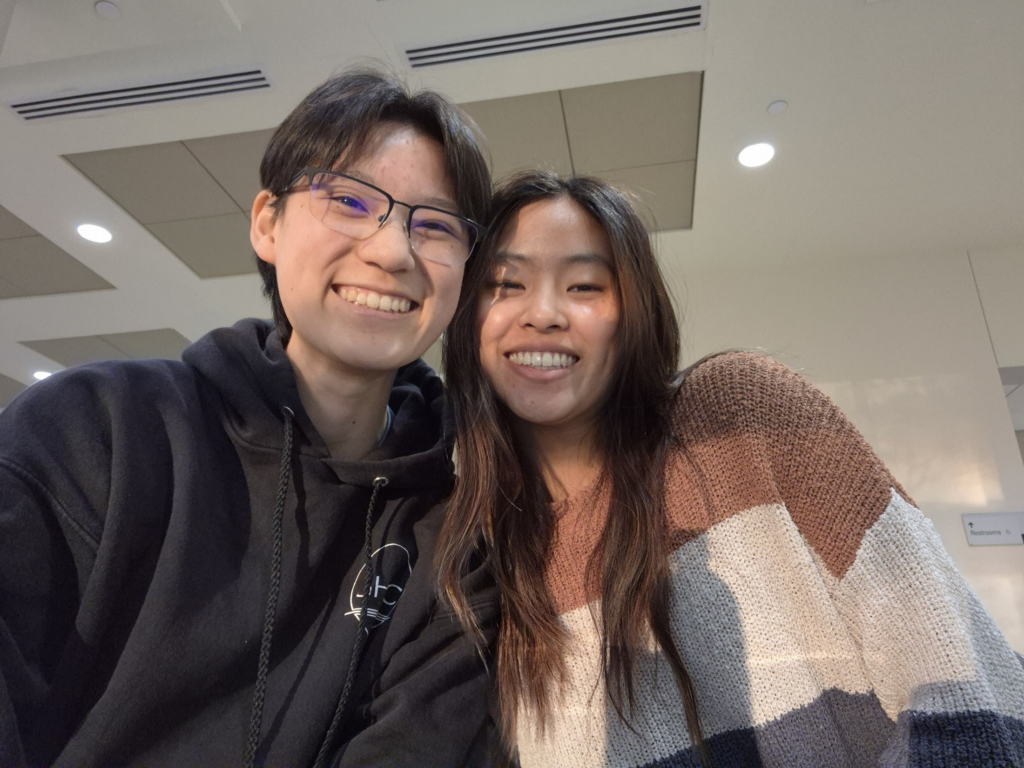
So, I interviewed my friend Rosie, who’s from Sunnyvale, California, and majoring in biophysics and history of science, medicine, and technology.
What made you interested in majoring in history of medicine, science, and technology?
Originally, it was because of my APUSH (AP United States History) teacher in high school my junior year and I thoroughly enjoyed it. I think it’s always nice to learn about the history of the country that you are in and to know how the policies that were made decades ago affect your current state of being. It’s always been interesting to me to track and find trends between history and the current state of things. I decided to major in it because I took a class my first-year spring called Rise of Modern Science. It was a really great class. The history of science is fascinating. It’s really cool to see how the developments we make in science are able to shape the world socially and politically. But also, this specific aspect of history caught my interest because as a scientist and biophysics major, I think it’s particularly interesting to see how your field has developed. Two hundred years ago, when Antoine Lavoisier was basing this phenomenon that when you burn something, it doesn’t actually gain weight, he had to look at only physical phenomena by recording and observing things with his own eyes. This is the whole reason we believe in oxygen as an element. It is so interesting to trace back what those in your field did to understand what we understand now.
How did you decide you wanted to double major?
I didn’t know that I was going to double major, but I always knew that I wanted to take classes that had a wide breadth of subject matter. I didn’t come in as biophysics either; I came in as chemical and biomolecular engineering and switched. I always knew that I wanted to work with the humanities, even if it wasn’t a double major. I was considering several things such as anthropology, environmental science, philosophy, medicine, science, and the humanities, and my current major. I would say my Rise of Modern Science class swayed me towards my decision. I took other exploratory classes throughout my first few semesters, but I’ve always been drawn more toward open-ended ethnographic interviews. History of science, medicine, and technology provided that as well as leaving enough room for others to take on their own interpretations. I like leaving lots of evidence in my work. I have my own opinions and will think they are right, but I have provided all the evidence here, and you are free to debate it as you want.
How is it being a humanities major at Hopkins?
I like it. Being a double major in STEM and humanities is nice because when you are tired of your STEM work you can work on your humanities work, and when you are tired of your humanities work, you can work on your STEM work. Pursuing a dual degree at Hopkins is particularly interesting. Hopkins has great programs set up. The humanities are well funded and well supported for students to do their own research, to complete their own projects, and to learn as much as we want in the fields that we want. I would say the same is true for STEM. I am currently doing two research projects, one in each field. The professors I’ve worked with on both projects have and will continue to support me well. Biophysics is a small department, and I get to know all of my professors pretty well. But, still, the amount of people that are STEM competing for the same positions, awards, etc. is always higher than that for humanities. Everything is well supported, but at the end of the day, there is a bit of a numbers game difference between being STEM and humanities at Hopkins.
What has been your favorite part about your history major?
I would have to say talking to professors, TAs, and other students about the things that we learn. This is something I do in other classes too. When I learn something particularly interesting in class, I go show other people. But it isn’t the same when I talk about historical facts with my STEM-heavier friends. I get to have these interesting conversations with people who aren’t necessarily history majors.
What advice do you have for prospective students considering humanities at Hopkins?
Lots of them end up at really cool places. For example, my writing center tutor is at the Library of Congress. I have learned so much in my humanities classes, in all departments. The humanities opened my eyes in ways that a STEM degree never could for me. I am a big proponent of everybody being well rounded to a certain degree. I think humanities majors should take STEM classes and vice versa. The critical thinking skills and being able to express yourself and look analytically at evidence from a humanities degree are super unique. While STEM has changed my perspective on the world, it hasn’t changed my perspective on me. However, with the way humanities work, I’ve noticed differences in the way I think about and express myself. I think that’s something everybody should be able to experience.
Specifically at Hopkins, there are just so many humanities degrees to pursue. They are all so special and diverse, like critical diaspora studies, as well as bigger departments like political science and international studies. Especially in this day and age, it is only at an institute like Hopkins that these programs are going to be funded. It’s important, in college, when you have the opportunity to take these classes, that you do.