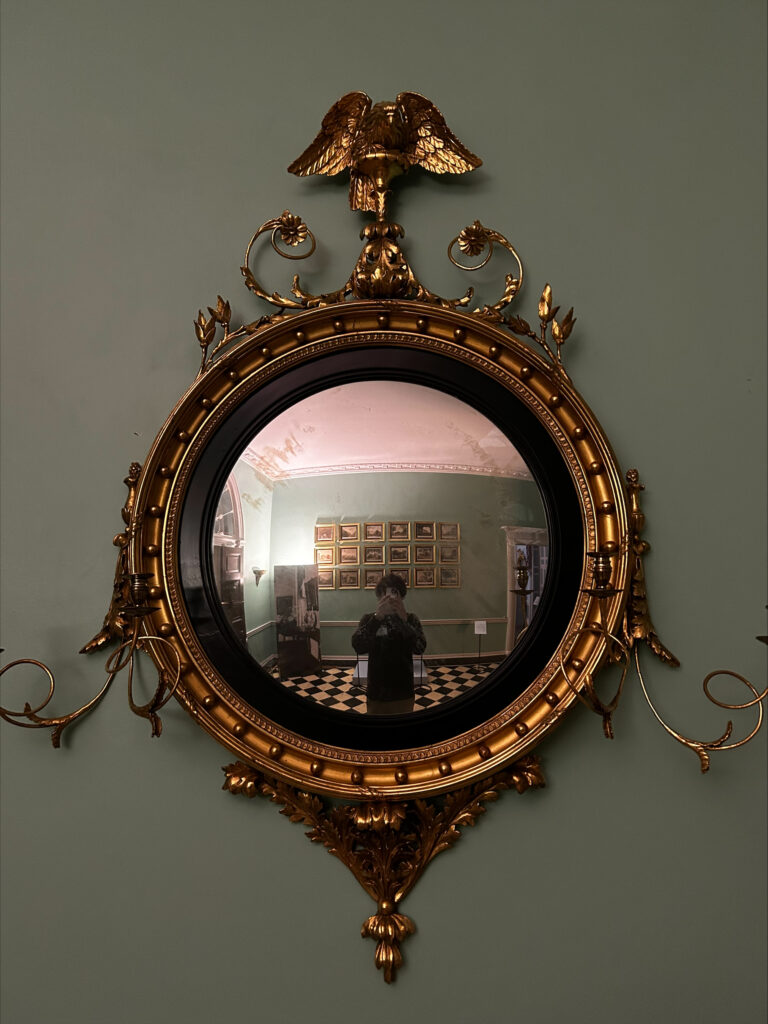
This past year, I felt like I was an invisible child living with a host family from the 19th century. They were the Carrolls, who once lived in Homewood House—old and important enough now that we made a museum of it. Or, if that doesn’t ring a bell, it’s the pretty building to the right of the Beach when you’re entering campus.
In my first semester of college, I contributed to the Homewood Museum’s History Through Poetry exhibit with a poem representing the story behind a silver salver, a sort of food and beverage tray. Commissioned by Harriet Chew Carroll two years after she separated from her abusive husband, Charles Carroll of Homewood, the salver nonetheless bears his family crest, a peculiar-seeming reminder of her trauma. In researching the salver, I became fascinated with the Carroll family history: who was being represented and how, who seemed hidden and why. Unlike most historians, I didn’t have to wait long for my questions to be answered. Conveniently, just as the exhibit was unveiled, the Library of Congress released a new batch of Carroll Family Papers, this time featuring Harriet’s voice in abundance.
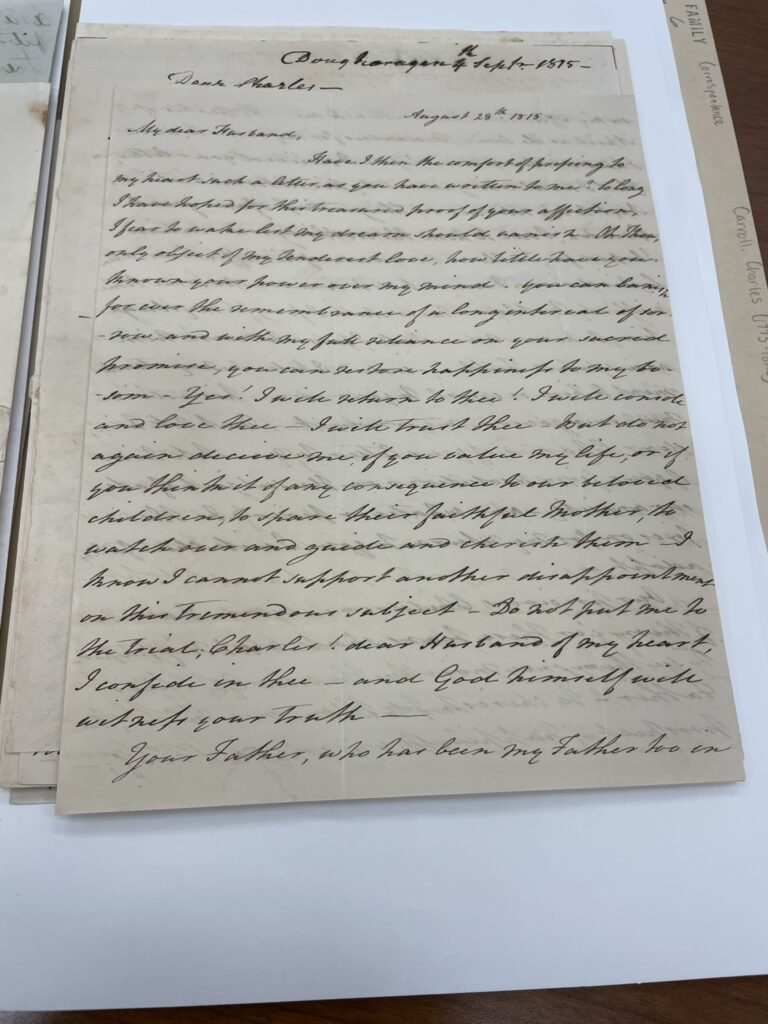
I received both the Homewood Museum’s Pinkard-Bolton Curatorial Internship as well as Hopkins Retrospective’s Hugh Hawkins Research Fellowship to undertake the task of transcribing Harriet’s correspondence, then revitalizing her history through poetry. Mentorship from Hopkins’ creative writing and museum experts led me to realize that poetry can act as a historical tool for reparative justice. Through poetry, everyone who was silenced then may speak now, if only someone does the work to research their story and represent it justly. Or, in forms such as blackout poetry or erasure, source documents can be sculpted to reveal a truer history within.
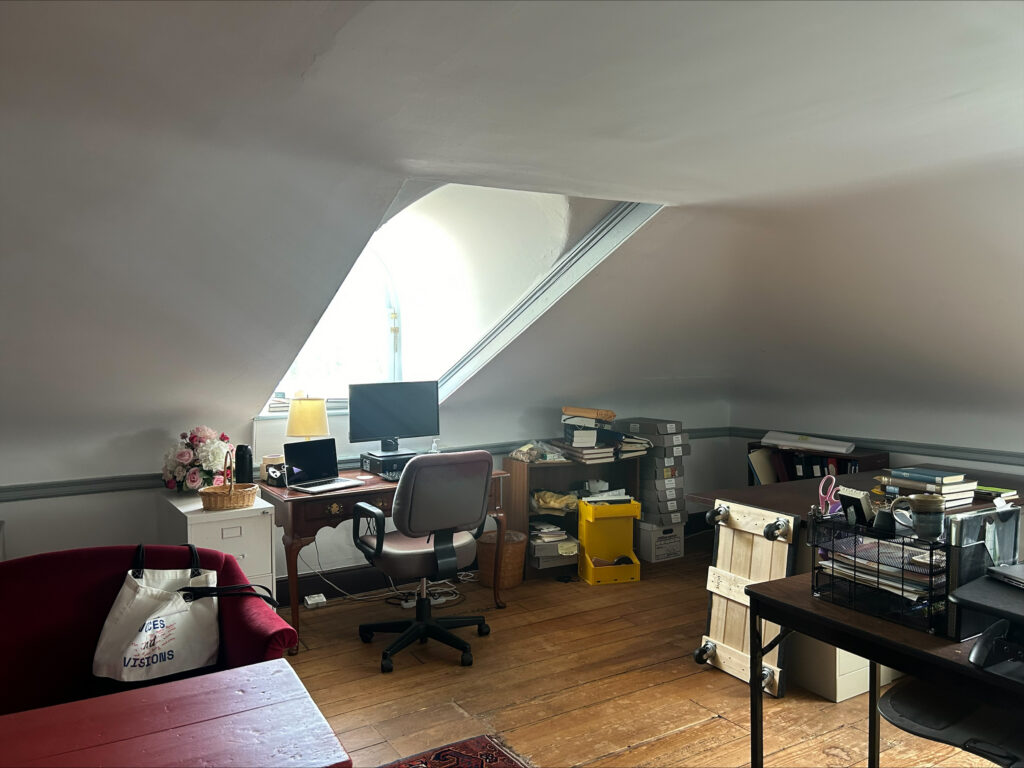
So, I spent part of summer after my first year in the museum’s attic offices reading 19th-century cursive handwriting on foxed, holed pages. I met someone long dead and befriended her through the way I became fluent in the quirks of her handwriting, or the way she referred to her daughters as little ducks. Only halfway through did I pause, feeling a disturbance like a wagon wheel hitting a large rock: Harriet, the woman whose correspondence I had been reading for weeks, suddenly writes to her husband many times over how she hopes and trusts no one will read her letters. “I wish to write to you without the restraint of supposing any eyes but yours shall read my heart,” she explains.
An ethical dilemma. But by this point, what could I do? I was two research awards deep into a project I had promised to present, only to learn the subject of my research was an unwilling participant. The academic rationalization for why she would have stressed the secrecy of her letters is that, given her already scandalous status of separation from her husband, any further wound to her reputation could have proven disastrous to her deemed capability as the caretaking parent to her children. But as an outsider intruding on another family’s affairs, did I have the right to decide what was best for her, even if the supposed threat had long passed? For a woman who had so much predetermined for her in her life, was her role as subject in my research only further stripping what little agency she had? Or, given that these letters were already public and readily accessible through the Library of Congress, had the damage already been done?
Despite my nerves and unanswered questions surrounding the ethics of such archival research as a whole, I chugged onward in my project. I wrote the poems. As the date of my final presentation approached, a descendant of the Carroll family visited Homewood Museum, and I was asked to speak with them about my research. Needless to say, I was worried. When you’re equal parts related to an ancestral abuser as you are an ancestral victim, which side of the story do you want to hear? Whose dignity and sympathy should be preserved, or is there a way to gently and honorably handle all parties?
I presented everything candidly, including one of the poems I had written. It addressed Harriet’s many-sided relationship with her son: care and love, yes, but also paranoia about falling prey to the same alcoholism his father did. In the end, the Carrolls I spoke with appreciated the research and asked for the rest of the poems when I was finished. As was my hope, they learned things about their family they hadn’t known before, just as I learned things from them about their family, which I hadn’t known before.
I could say this counts as an “only at Hopkins” event by nature of the fact that Homewood Museum is exclusive to Hopkins, and with it, the Carroll family’s history. All of that would be true. However, beyond stating the obvious, Hopkins proved itself to be the type of institution comfortable awarding funds for a project like mine, which produces the type of arts-rooted deliverables that are being targeted today at many institutions. Despite all storms raging outside, I hold an empirical faith that Hopkins will cement itself as not just a place for the arts, but a patron of the arts.