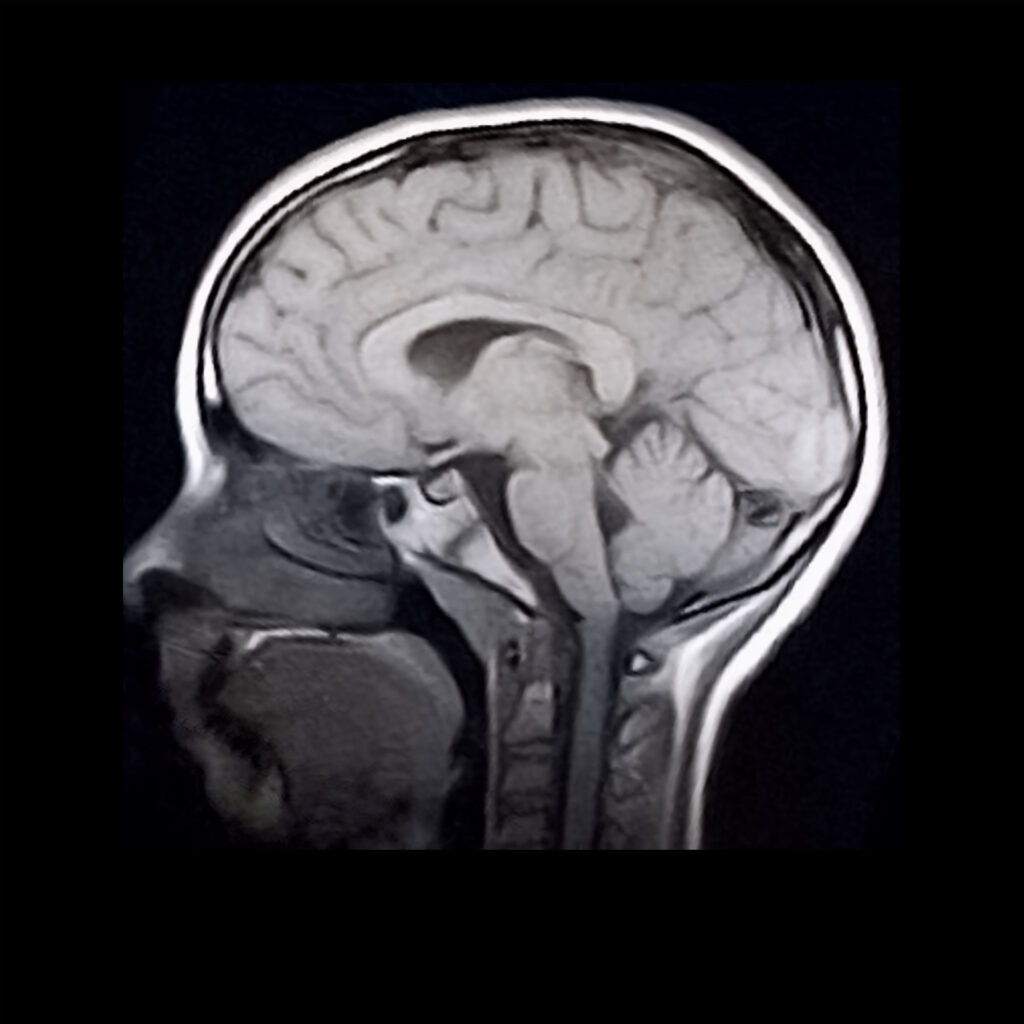
Although I’m studying neuroscience, I actually applied to Hopkins hoping to study biomedical engineering (BME). BME is the only track here that has a separate admissions process, making it possible to be accepted to Hopkins, but rejected from that major. This is exactly what happened to me. I was left to decide if I wanted to stay BME and go to a different school or go to Hopkins and study something else. It caused me to do a ton of research into the different programs here, so I’m going to outline my process for anyone else on the fence!
Program structure
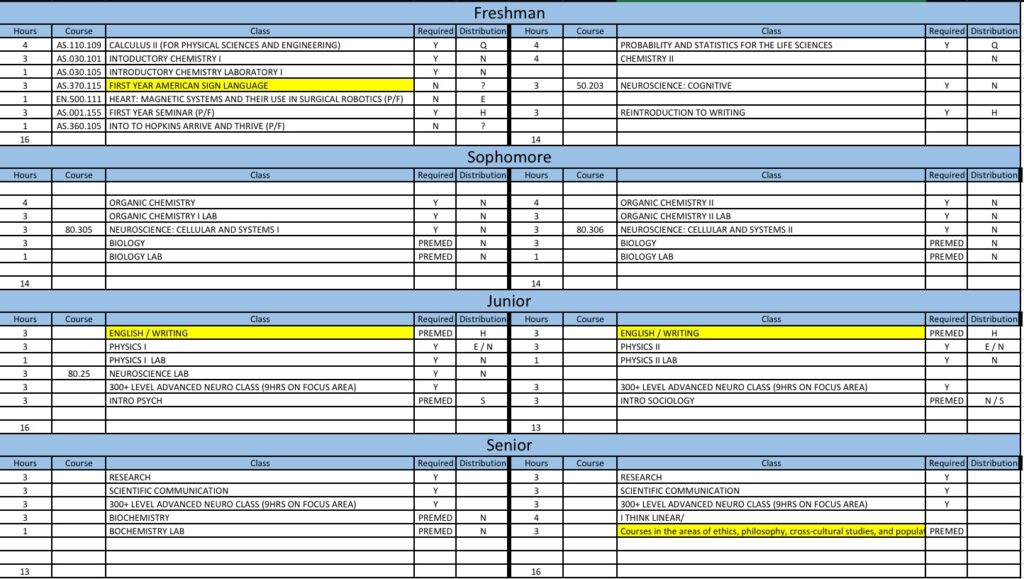
The first thing that stood out to me is how many classes overlapped with pre-med requirements. I knew I was going to be taking these classes anyway, so I wanted them to count for something. This shouldn’t be your most important factor though. It’s pretty easy to study something non-STEM and still take the classes you need. I know a lot of people who are minoring or even double majoring and still finishing in four years.
The second thing that caught my eye was the four focus areas students choose to study (cellular and molecular neuroscience, cognitive neuroscience, computational neuroscience, and systems neuroscience). I thought it was super cool that I could tailor my classes to my specific interests. For example, the cellular and molecular and systems focus areas have a lot of overlap with biology. Computational integrates a lot of math, and cognitive takes a more psychology-based perspective. I ended up choosing cognitive because these were the units in my classes that I liked the most, and it aligned with the research lab I’m in.
Lastly, I appreciated having the option to pursue a combined BS/MS degree. This can be completed in 4, 4.5, or 5 years. At the time, I wasn’t sure whether I would take any gap years before medical school and wanted to keep my options open. Having never done research before, I also didn’t know if it was something I would want to pursue in the future.
Other Majors That Caught My Eye
Once I understood what neuroscience had to offer, I started comparing it with similar areas of study to make sure it was the right fit. Here’s how I ruled those ones out:
Neuroscience is heavy on the natural sciences. It involves chemistry, biology, and physics, while emphasizing the brain’s molecular, cellular, and systems-level mechanisms. I was excited to learn about the brain because it has always interested me, and we never really talked about it in my classes in high school. It was kind of a mystery subject that had always been in the back of my mind.
Cognitive science seemed to be much more interdisciplinary. It mixes psychology, linguistics, neuroscience, philosophy, and computer science. It’s pretty common to get a linguistics minor with this degree. I wasn’t particularly interested in philosophy and computer science, so I knew this one wasn’t for me.
Psychology felt broader than neuroscience. There are classes on love/attraction, crime, development, and so much more. I thought the classes looked fascinating, but I was looking for something with a stronger focus on the natural sciences and biology. Since I chose cognitive neuroscience as my focus area, I’ve been able to take some fun psychology classes that are cross listed with neuroscience. This has given me the best of both worlds.
Behavioral biology analyzes behavior from a biological perspective and an evolution perspective. I was more interested in the brain than the evolutionary side of things. I’m glad I didn’t go with this one too because I took a course in this department, and I realized I was much more drawn to neuroscience’s focus on the brain than behavioral biology’s emphasis on evolution.

Molecular and cellular biology is all about the basic components of life—DNA, RNA, proteins, signaling pathways, etc. It definitely has a rigorous science focus like I wanted, but I think it was a little too heavy for me. I wanted to learn about more abstract things like cognition, which neuroscience allowed me to do.
The last program I considered was public health. This one is very different from the others because it zooms outa lot! It looks more at populations, health systems, and policy. This was a hard decision for me because I knew I’d like this one. Students also get to take classes at the Bloomberg School of Public Health, which is pretty cool. Ultimately, I was just too curious about the brain to pass up neuroscience, and I could always pursue a graduate degree in something public health-related later.
Some Fun Neuroscience Classes I’ve taken
Now that I’ve taken most of my necessary core classes, I want to highlight a few of my favorites:
Neuroaesthetics was the first upper-level neuroscience class I took. It’s a relatively new course at Hopkins that focuses on how aesthetic experiences like art and music are good for the brain. It has a clinical perspective I felt was very valuable. We learned about how these experiences can be beneficial therapeutically for elderly people, soldiers suffering from PTSD, students, and people with neurodegenerative diseases. My past volunteering roles sparked my interest in this class and I highly recommend it!
Human neuroplasticity was the next upper-level class I took. I was looking forward to taking this one because it’s taught by my lab principal investigator! The course consisted of reading research papers, group discussions, and writing a paper ourselves. We also got to pick one research paper to present on, which was nerve-wracking but fun. Our discussions centered around the debate of nature vs. nurture in several areas like language, math, and reasoning. This class was extremely engaging and left me wanting to investigate these topics further.
Lastly, I want to give an honorable mention to cognitive neuropsychology. I can’t say much because I’m taking it right now, but so far, it’s been extremely enjoyable. I’ve been wanting to take this one since my first year, and it’s been worth the wait. It gives a good introductory explanation of the brain. From neuroanatomy, brain damage, and brain imaging to the visual system, memory, and amnesia, this class covers a lot. We even got to see a real human brain, which has me looking forward to taking our required neuroscience lab course next semester.
Getting rejected from BME turned out to be a blessing in disguise because neuroscience has been the perfect major for me. The fun classes and flexible programming make this program a great choice for anyone interested in learning about the brain.