Neuroscience Laboratory (3-Credits): This course will give students the “hands-on” experience of the interdisciplinary nature of neuroscience. Students will use anatomical and neuro-physiological techniques to understand the basic underlying principles of neuroscience.
I didn’t really know what to expect after reading that description. What exactly did “hands-on” mean? What “neuro-physiological techniques” were we going to use? I just knew the class was required for my major, so I clicked “enroll” and hoped for the best.
That vague course description became a lot clearer on the first day of class, when my TA handed us a Tupperware container to hold all the sheep brains we’d be dissecting throughout the semester. In that moment, I realized Neuro Lab was going to be very different from anything I’d taken before.
WHAT TO EXPECT
Neuroscience lab is a required course for neuroscience and behavioral biology majors. People tend to take it during their junior and senior years, but it’s possible to take it earlier if seats are available.
Labs at Hopkins are normally run by TAs, but this one is run primarily by three teachers who alternate teaching. There are also two TAs who walk around and answer questions.
The class is split into two distinct units: anatomy and physiology. Pre-labs (before-class work), assignments, and attendance make up about half the grade, while two exams—one for each unit—make up the rest.
The anatomy exam is a practical, requiring students to rotate around different stations and identify 100 brain structures on humans, sheep, and plastic models. The physiology exam is more of a traditional short-answer test, but there are a few stations mixed in as well.
There are also four opportunities for extra credit points: making a perfect midline cut in a sheep brain or successfully recording from bursting, silent, and beating neurons. These kind of came down to luck, but my lab partner and I liked the challenge of trying to achieve them anyway.
Overall, the workload is pretty traditional for a lab class at Hopkins. In-class reviews are built into the syllabus, plus the TAs make their own review materials that are extremely helpful for exams.
NEUROANATOMY
This unit was easily my favorite. We each got a sheep brain that we spent a couple weeks dissecting. The teacher demonstrated each step, and we followed along, practicing identifying structures as we went. The brains are sourced from Nebraska Scientific, a company that uses the by-products of the packing industry to provide resources for science education.
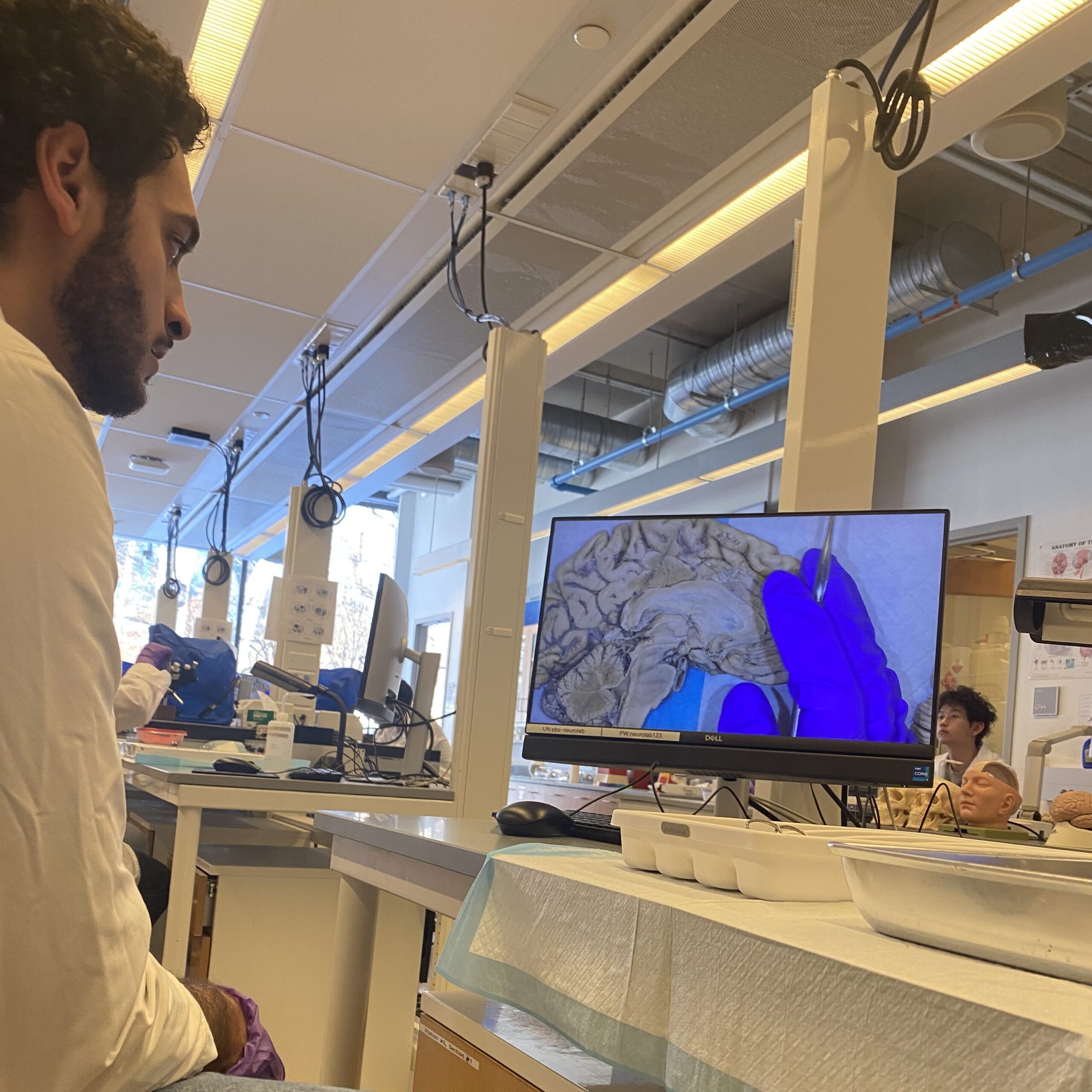
After that, we were tasked with making a perfect midline cut, which basically means slicing the brain into two equal halves. It sounds really easy, but it’s surprisingly difficult! My lab partner and I got lucky, and we were the only ones in class to get this extra credit point. Everyone gathered around our station and admired our “beautiful” brain. This was definitely a situation I never expected to find myself in.
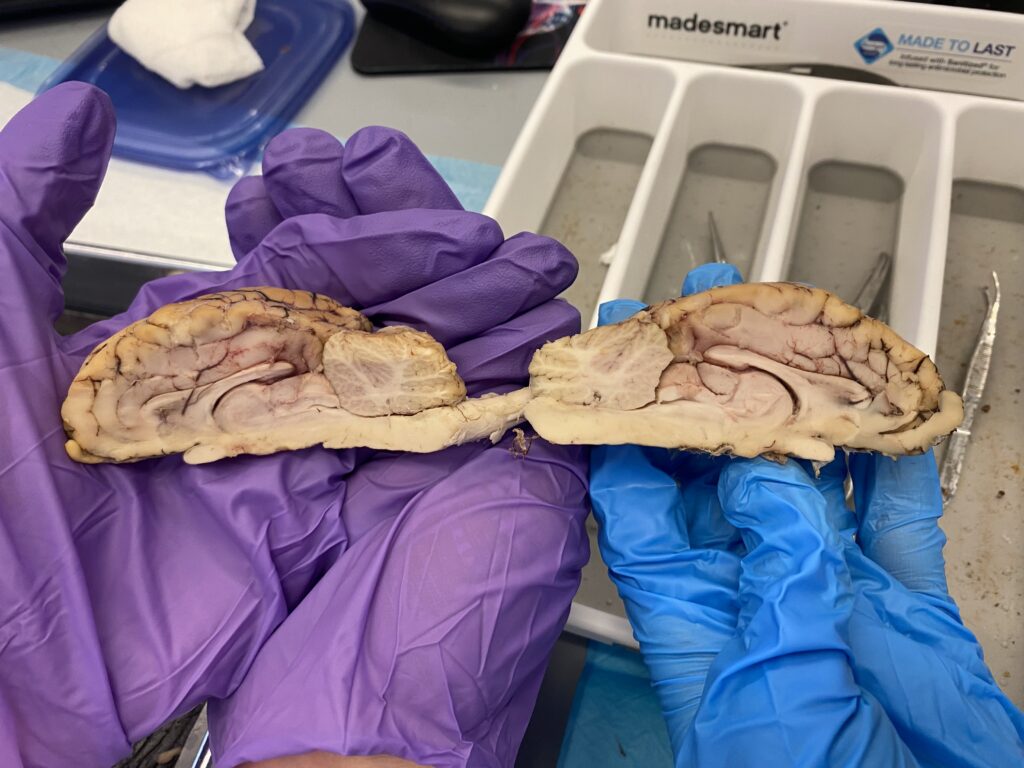
We got one more brain to slice for our review day. Every lab group made a small quiz, and we rotated around as if we were doing a practice practical. This was really good practice for our exam, and our TAs made sure we knew which structures we were looking at.
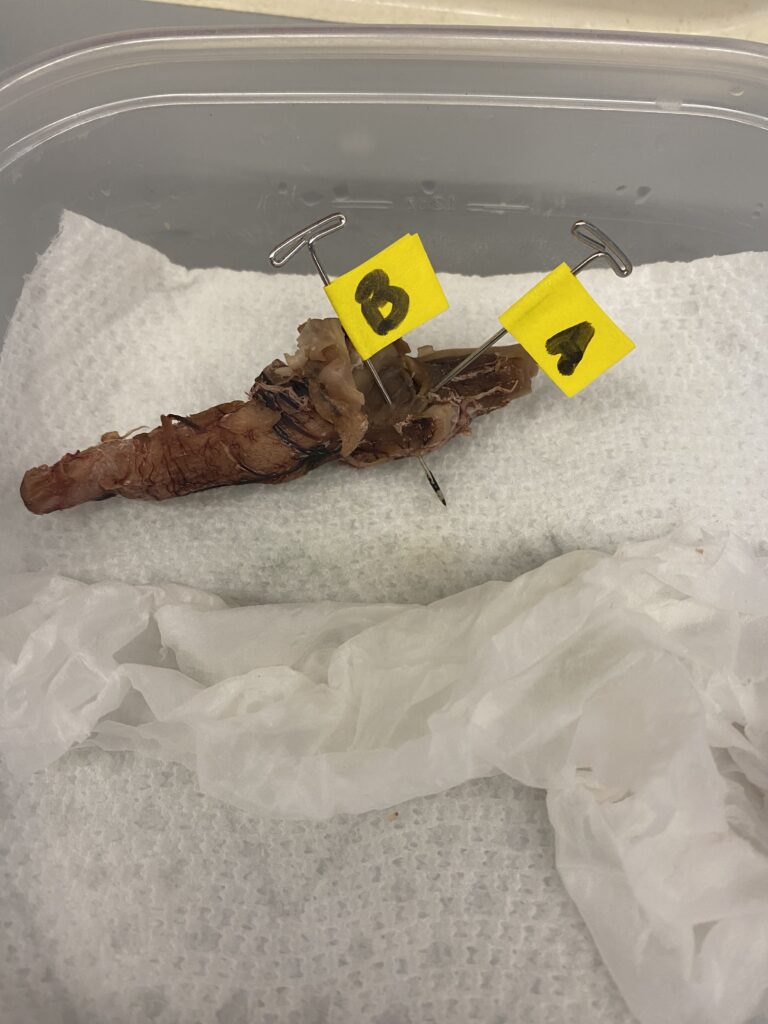
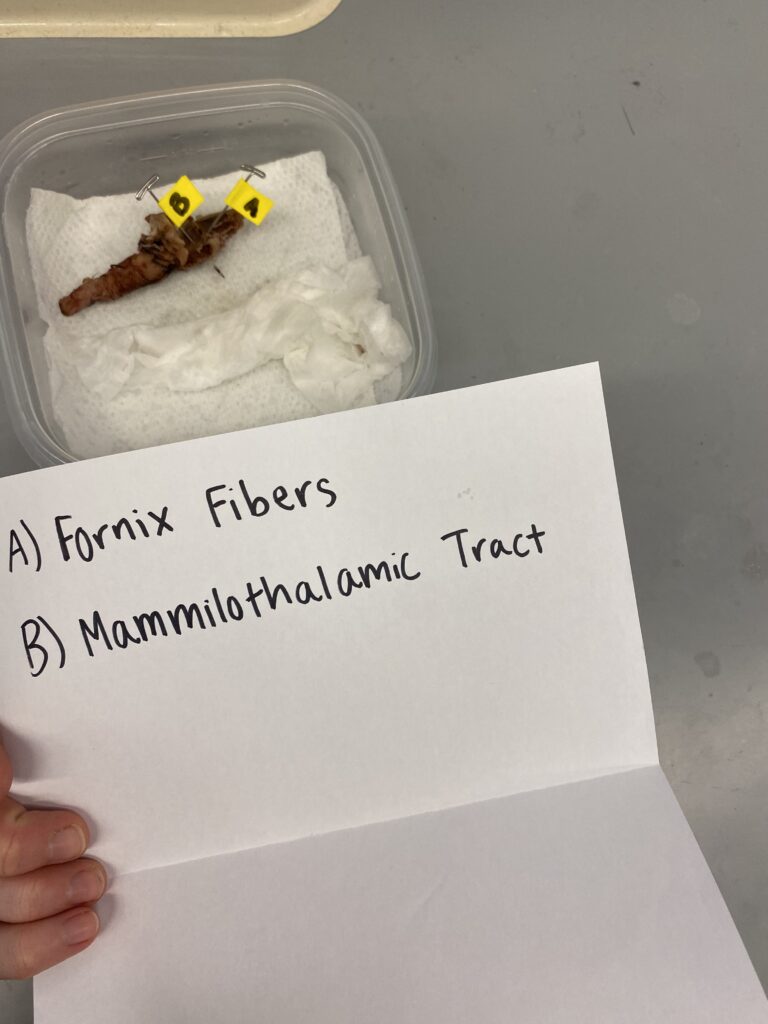
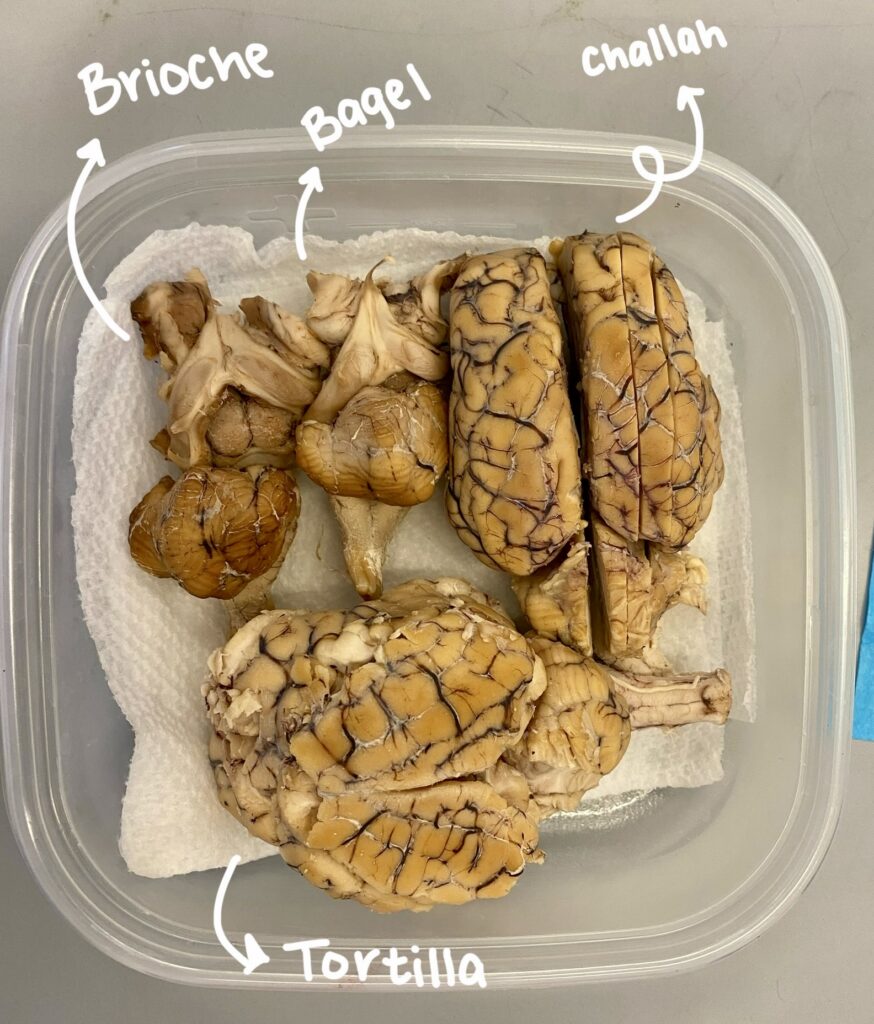
Overall, my lab partner and I went through four brains. Throughout the lab, we decided to name all of our sheep and somehow settled on a bread theme (I’m not sure why). We ended up with Brioche, Bagel, Challah, and Tortilla. Naming them may be odd, but I had a lot of fun doing it and even got the bio lab students I TA to do it too. Trust me, it’s entertaining!
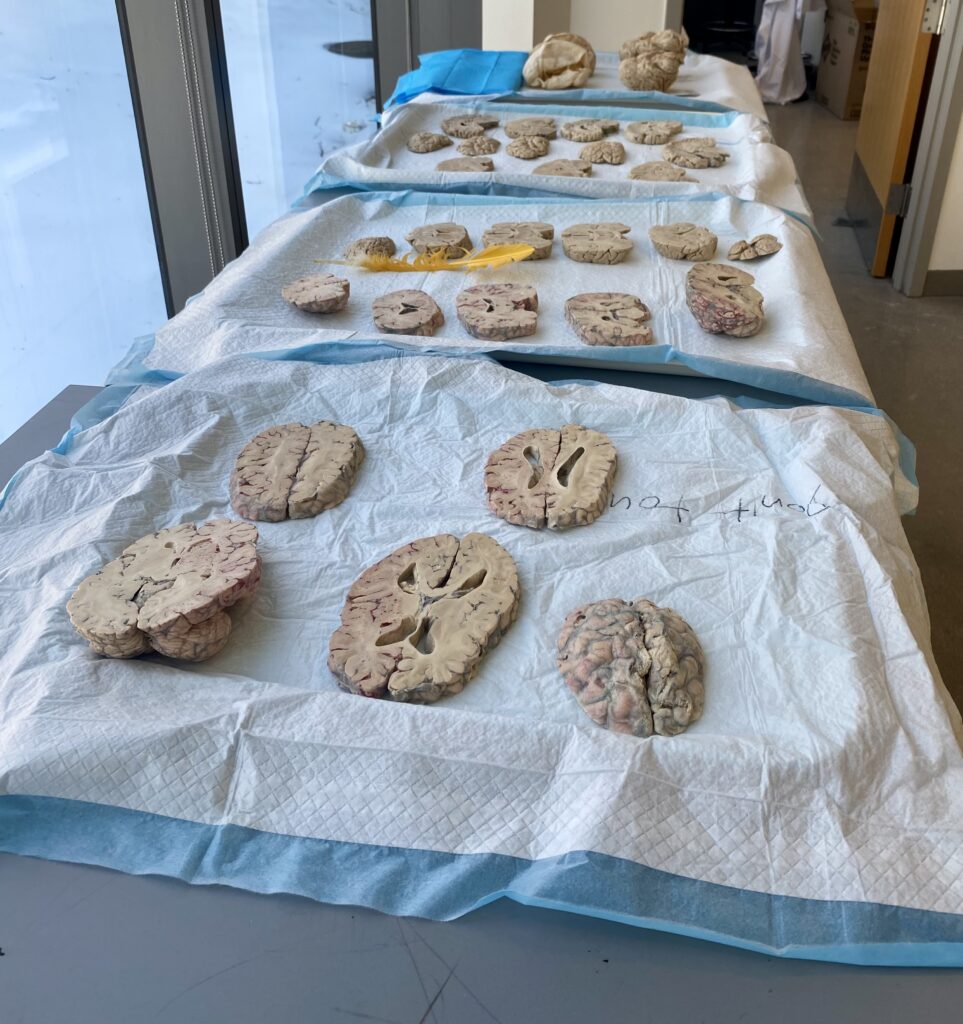
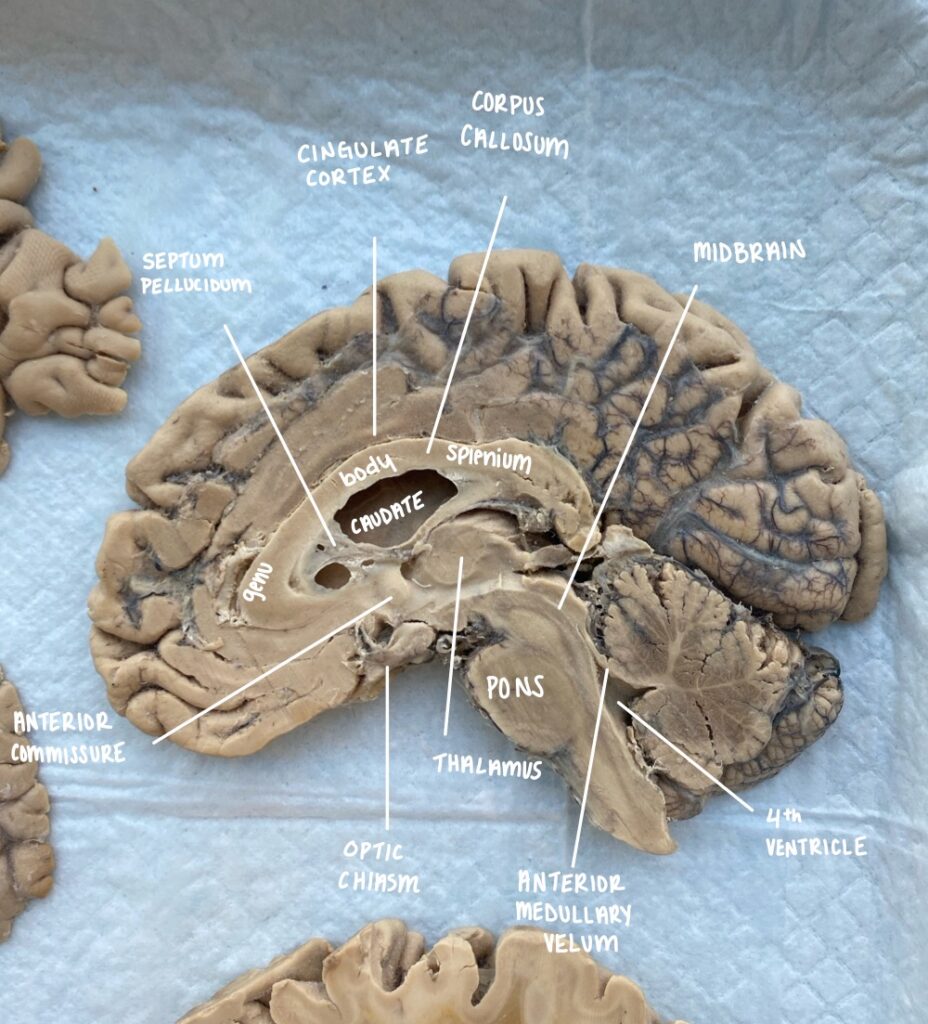
Our anatomy unit wasn’t limited to sheep brains, however. There were human brains on display in the back of the room for us to look at. During class, the teacher would also point out the nerves and structures we needed to know. This was my favorite part of lab. I’d never seen an up-close view of a real human brain before, and now I was seeing them every week!
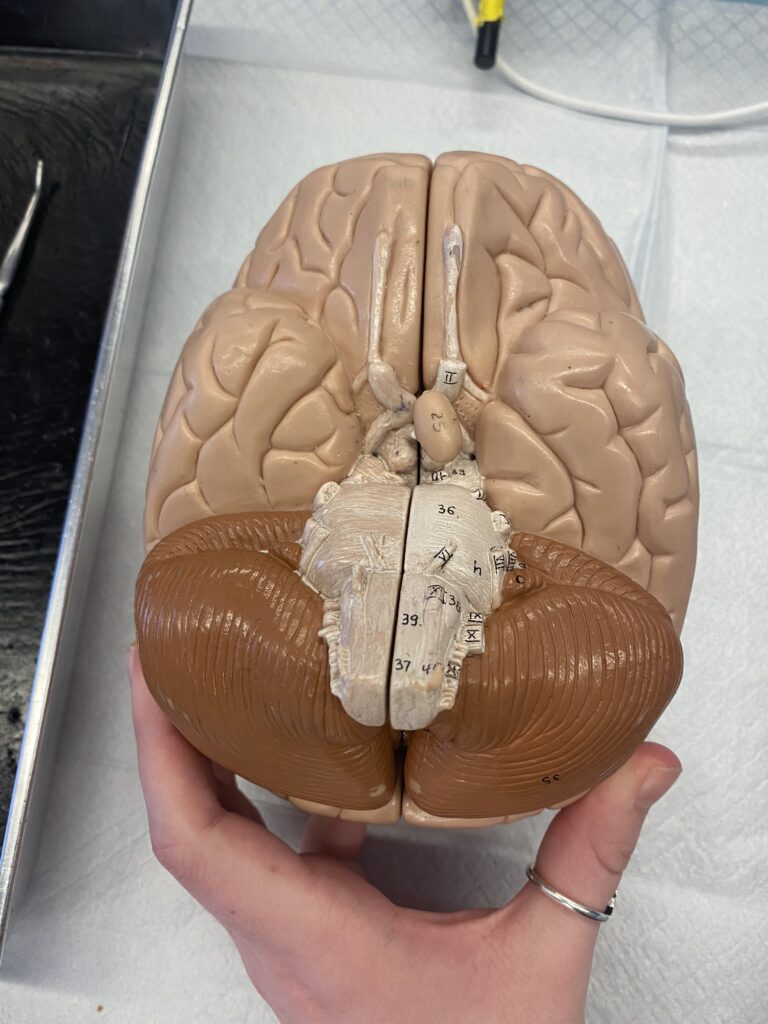
In addition to that, we also used models to learn anatomy. These were especially helpful with learning the cranial nerves because of how simplified they were.
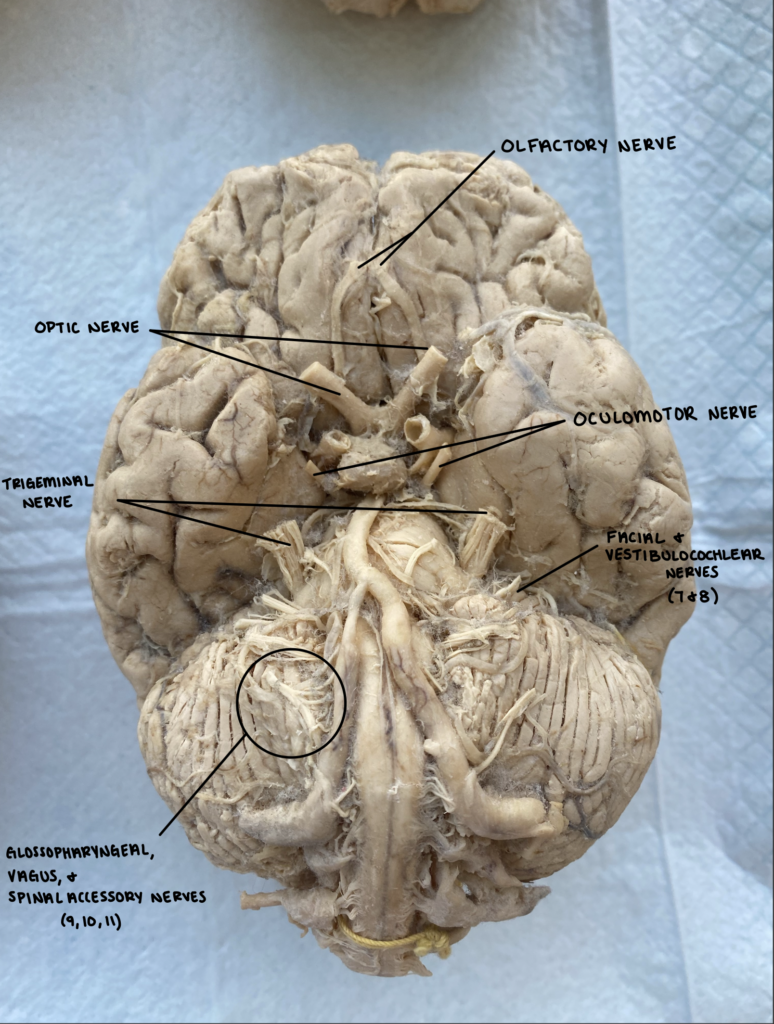
I was nervous for our practical because identifying 100 structures is no joke, but it ended up being really manageable. We had an in-class review session and TA-led review. We were given flashcards and practice questions. There were also videos in Canvas, the online learning platform Hopkins uses for classes, that I watched before the test.
I found it most helpful to take a ton of pictures during class, then add labels and turn them into my own flashcards. By the time our exam rolled around, I felt super prepared and did just fine.
ELECTROPHYSIOLOGY
The second half of the class focused on electrophysiology, the study of electrical signals produced by living organisms. First, we learned about some basic properties of circuits like grounding and noise.

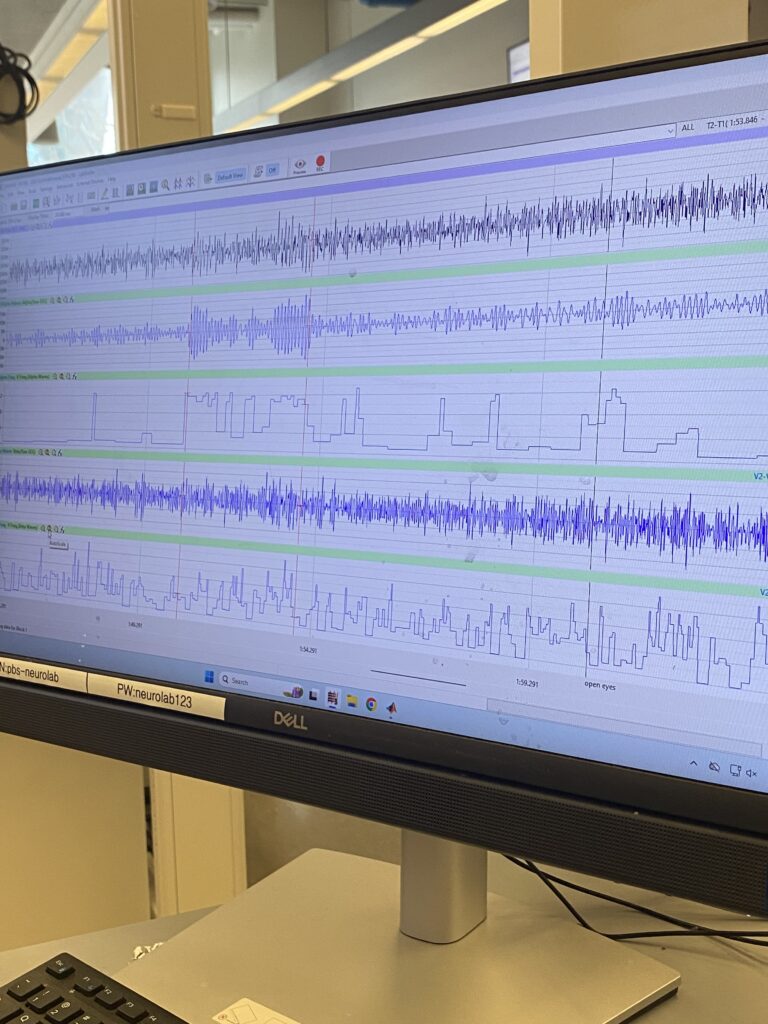
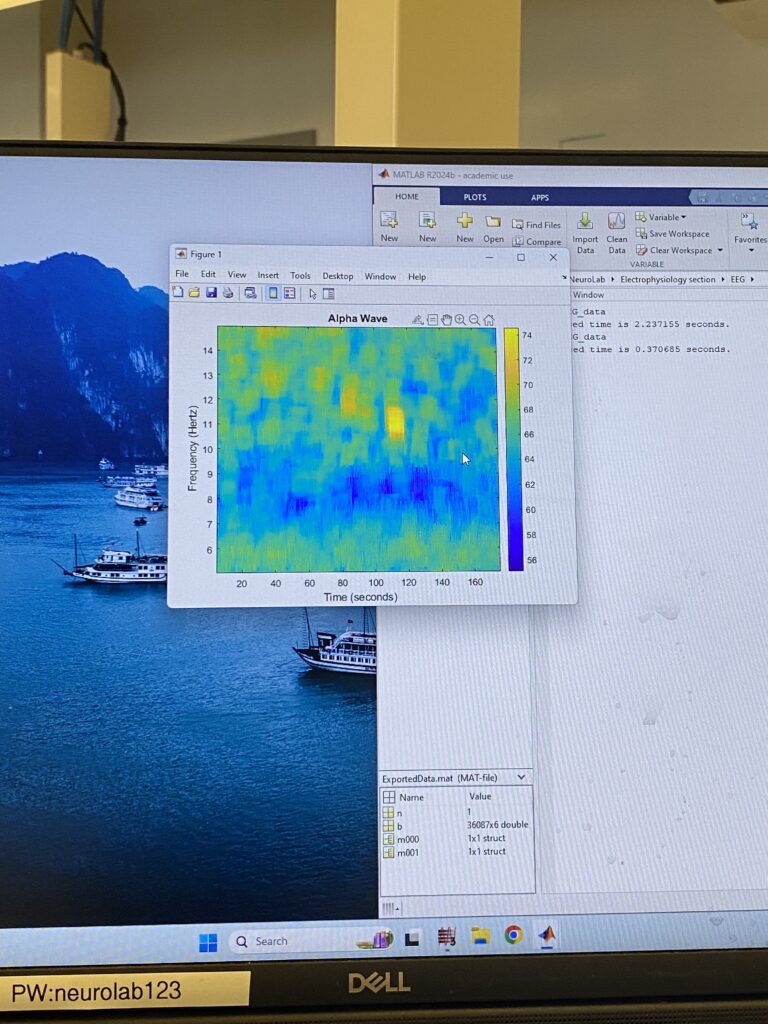
Then, we actually got to do an EEG in class. We were trying to observe specific brain waves, so we alternated between being alert with our eyes open and relaxing with our eyes closed. It was really neat to see my brain activity on the computer and actually understand what I was looking at.
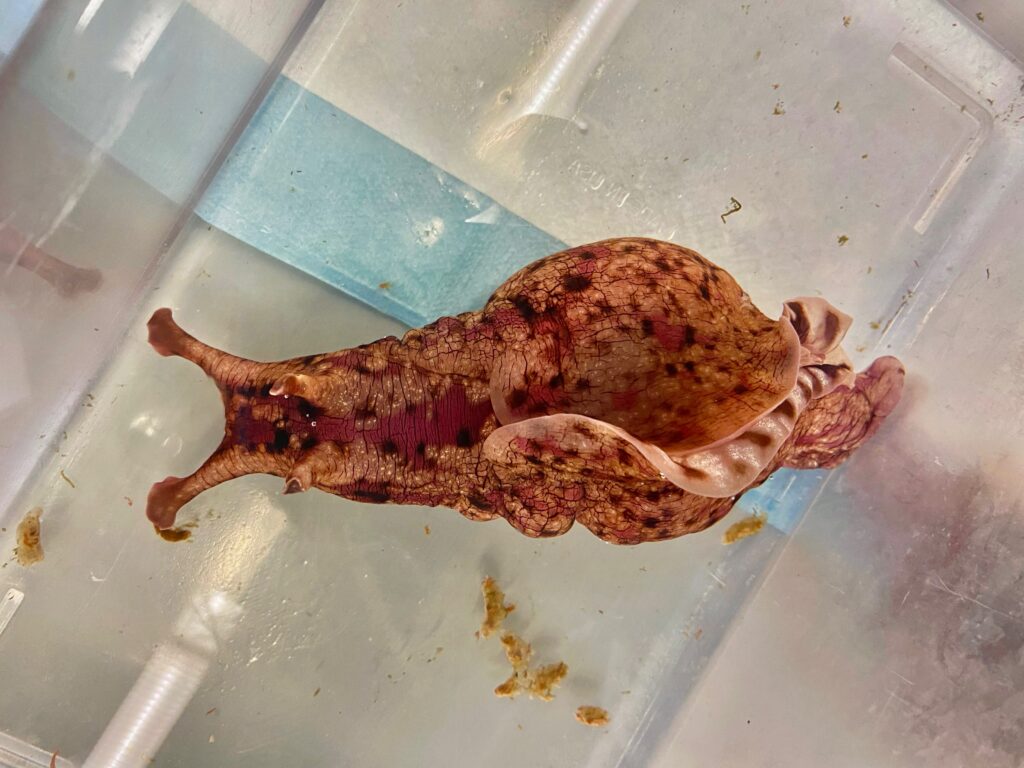
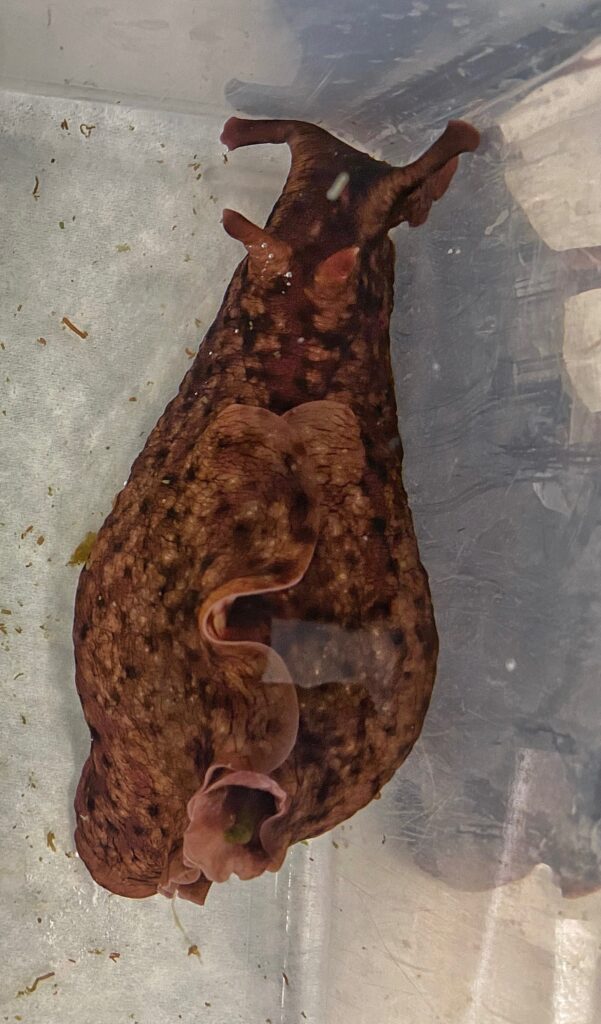
After this, we started working with live animals—something I’ve never done in a lab before. We studied aplysia, which are more commonly known as sea slugs. Since their anatomy is relatively simple and they have large neurons, they’re often studied in neuroscience courses. We learned to identify different structures, as well as understand their feeding habits and reproduction.


The fun part came when we actually tried to record from neurons. Each week, we would get a new aplysia, anesthetize it, and remove a large group of neurons (known as a ganglion). Then we’d put our ganglion under a microscope and try to penetrate a neuron using a glass electrode.
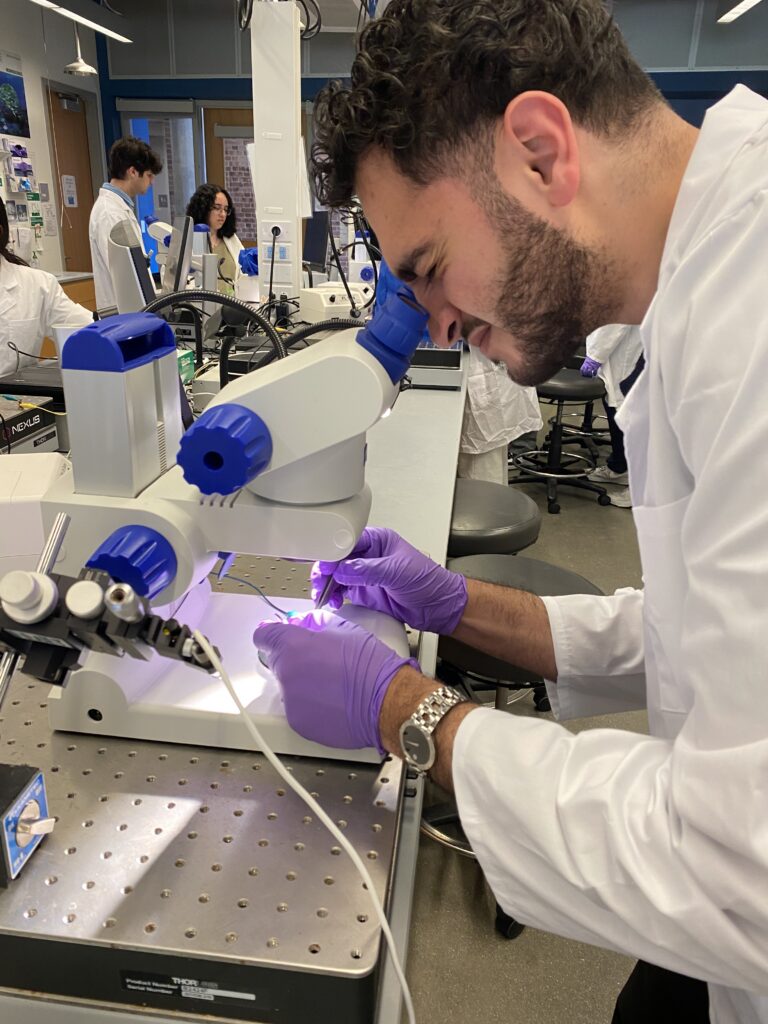
Although it was repetitive and sometimes frustrating, the lab’s atmosphere helped us stay motivated. The teachers played music during class—anything from pop to classic rock—and it’s hard to stay annoyed when you’re clubbing to throwback hits from the 2010s.
We learned about a few different types of cells—silent, bursting, and beating. If we happened to penetrate any of these neurons, extra credit was awarded. More people achieved this one than the perfect midline cut, but my group did not. When someone hit a neuron, we’d all excitedly crowd around their computer to watch it spike.
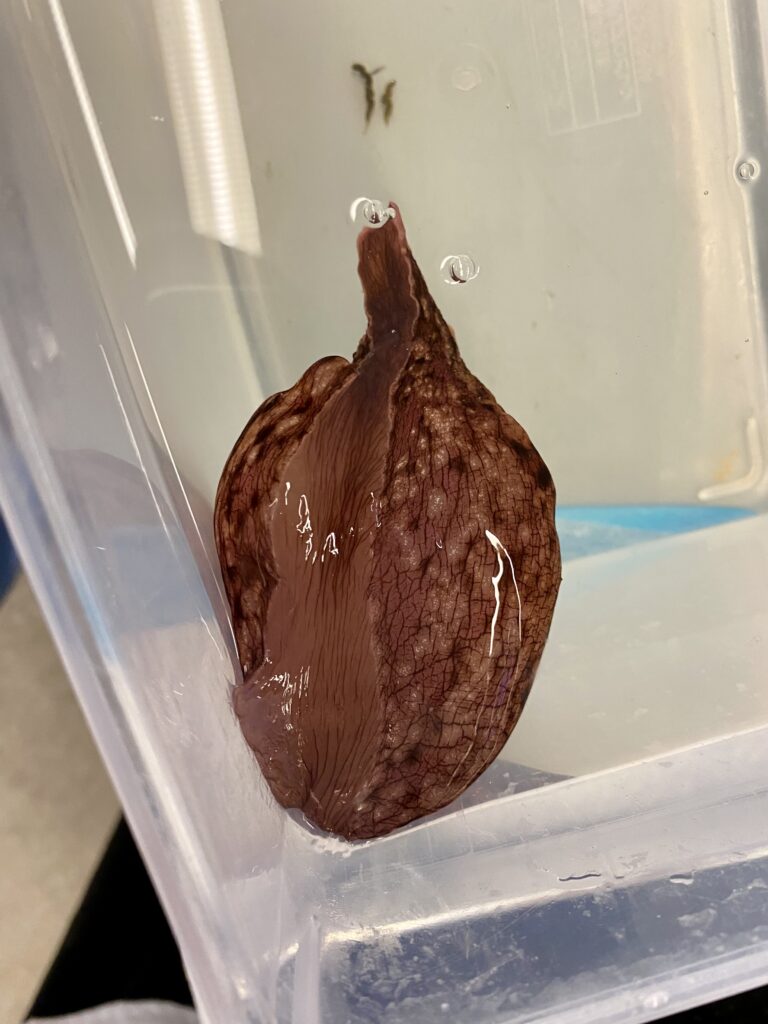
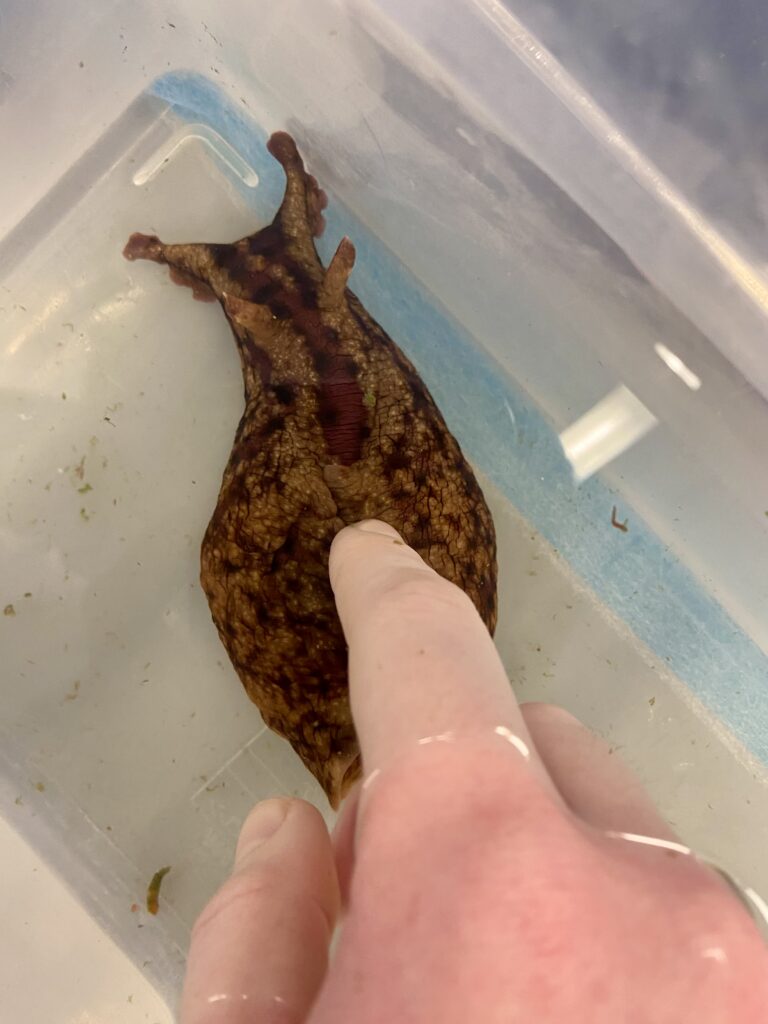
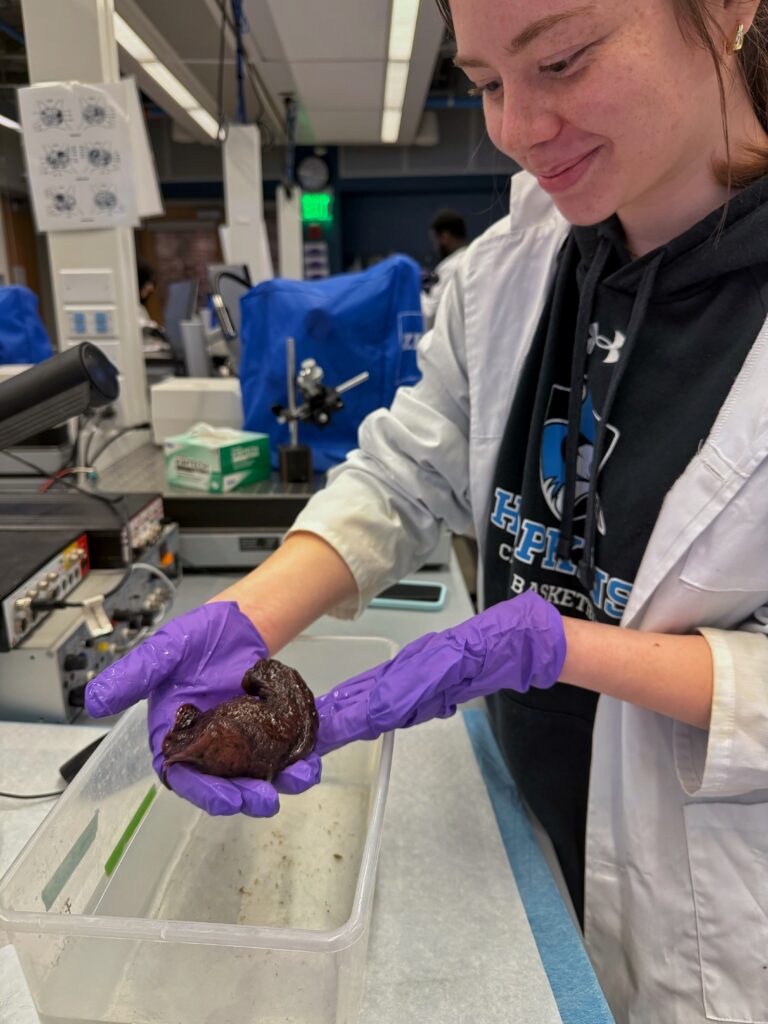
My favorite part of our electrophysiology unit was meeting our new aplysia each week. Once again, my lab partner and I decided to name them all. There was Lettuce, Milk, Mousse, and Meatball. A few of them inked when we were working with them, but I know they still loved us (I could just tell).
I was a little nervous for this exam because we’d covered a lot of content, but our TAs held an amazing review session. They also shared some study materials that made me feel ready for the test. Ultimately, I had nothing to worry about.
As the semester came to a close, it was clear Neuro Lab was more than just another major requirement. We didn’t just learn about neuroscience—we actually did it. Looking back, that mysterious course description ended up being surprisingly accurate. Not only was this lab hands-on, but it was also an experience that completely changed how I think about learning. It’s safe to say I’ll never look at a Tupperware container the same way again.