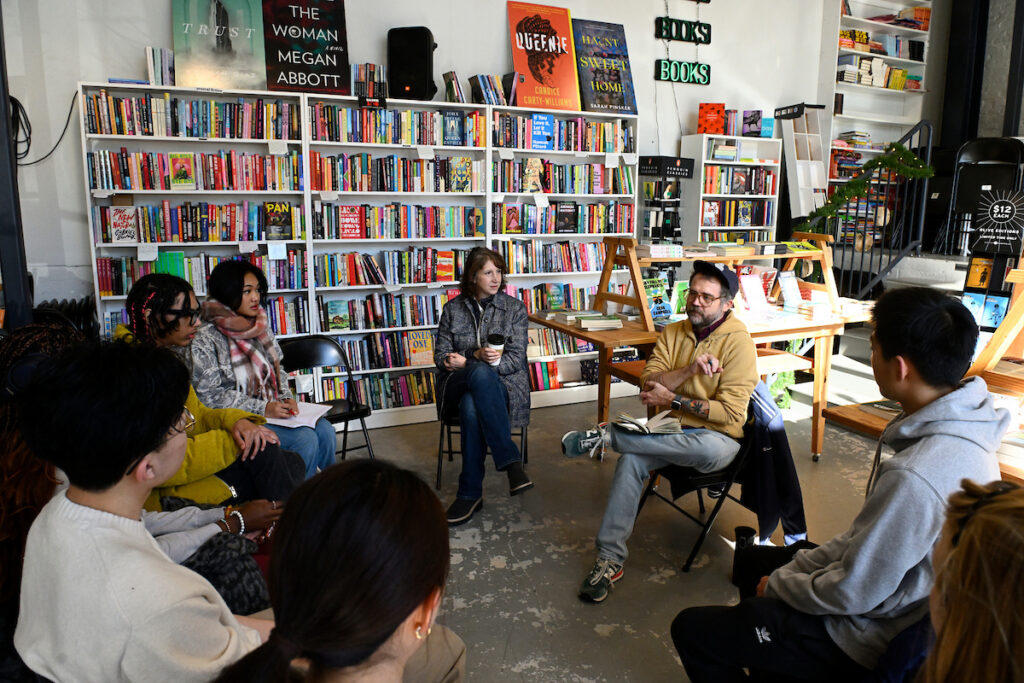
I am writing just to say that I enjoyed the Writing Seminars Reading Series events I went to last semester; that is, the first event I attended was so unbelievable I had to drop my after-plans and spend an hour in Wyman Park, kicking dust and trying to parse what just happened.
I am writing just to say that Susan Choi is a genius. That on an unremarkable March evening, her sentences are not complicated; they do not shock the mind out of its stupor. But they pull and curve and suggest, until a world appears that is absolutely immersive, absolutely smooth. And that the narrator of this world speaks with an intonation as precise and true as that of an actor.
These are the only points that really matter, but I owe it to you to provide some backstory. I was only at the Reading Series events because I was taking Introduction to Fiction and Poetry, which required that I attend at least two of these. My professor called them “book talks.” “The first book talk of the semester is Wednesday in Gilman 50” he would say, or “Chang-rae Lee, a novelist, will give a book talk tomorrow.”
Then one day I heard, “Susan Choi is giving the second-to-last book talk of the spring semester tomorrow,” and so at 6:03 the next day I rushed into the basement of Gilman Hall. I was literally the last one in. In a fit of panting and marveling at my latest escape from the reckoning, I only half-registered the 150 people already in the room, gathered for a purpose I did not yet truly understand.
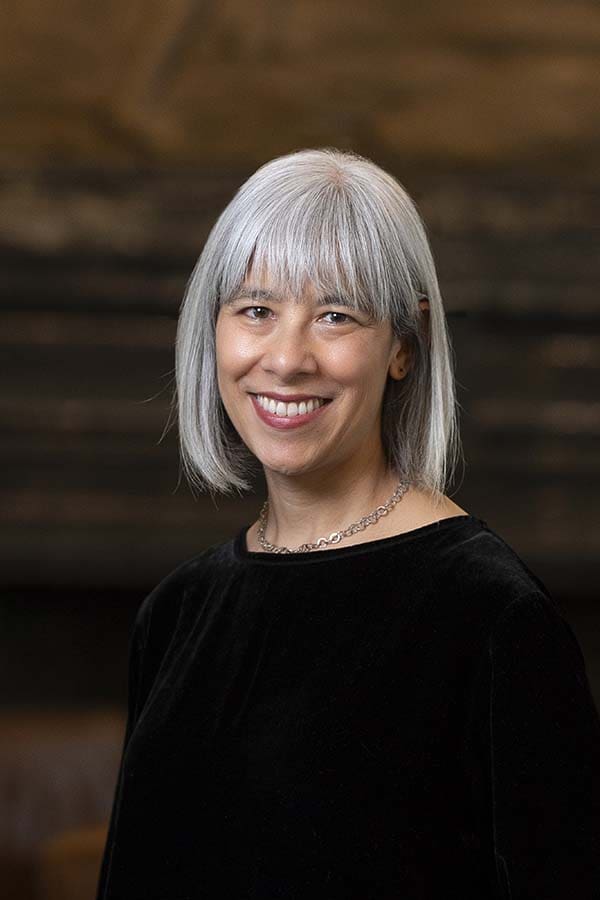
A colleague went up to give an introduction. This woman who was about to speak had won a national book award, been a finalist for it, been a finalist for the Pulitzer in fiction, and currently taught in the Writing Seminars department at Hopkins. Her new book, “Flashlight,” had recently come out. Also, Joan Didion called her “a writer whose intelligence and historical awareness effortlessly serve a breathtaking narrative ability.”
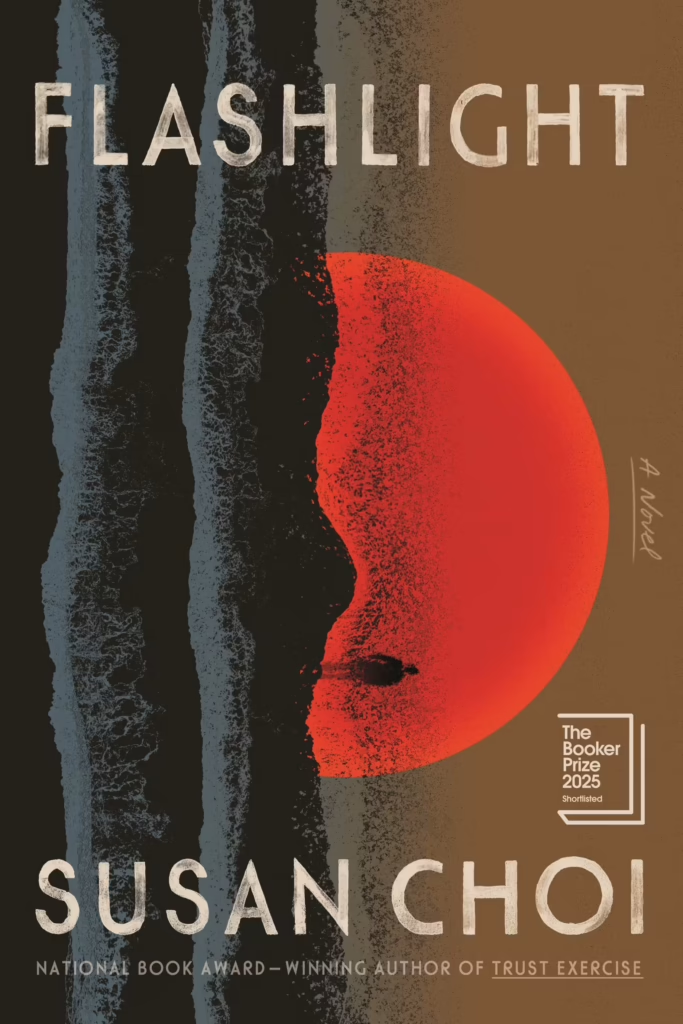
Then Choi began her reading, starting with a passage about a sarcastic 10-year-old named Louisa going to therapy. Do you remember the moments when you first witnessed big-league talent in person? I have a couple. One, observing Clint Dempsey’s (the former captain of the U.S. Men’s National Soccer Team) first touch in the only professional sports game I’ve ever been to: the perfect security of the ball between the feet, the dismissal of the danger of a pressing defender in a nosebleeds-audible tum. Two, hearing Bach from the second row at a piano recital at Peabody, and finally understanding the hype.
Now here is three. What hits you first is the manner of speaking. Would you expect to enjoy listening to someone impersonate an indignant 10-year-old for thirty minutes? But Choi just makes it so real; you have to listen, and in fact she hits the nail on the head for four or five characters. Then at some point, you recognize that her sentences are just as good as the telling: rich but measured. Here is Louisa, the 10-year-old, describing her therapist: “He was onto something, his triumphant tone told her, as if he won a point for every little crack where her words didn’t fit themselves smoothly together. She swung the light into his face and he squinted but didn’t scold her, so she swung it away again as a reward.” The soccer term, à la Clint Dempsey, for Choi’s reading and writing is “clinical:” conquering through mastery of the fundamentals. If this sounds underwhelming, it is not. You only know when seen, or heard, how transcendental it can be when someone perfects the basics.
I had one more talk to go to after that, although I didn’t need any convincing now. That second week, it was Jonathan Franzen. While Franzen is probably Choi’s intellectual equal, he wins on forgetfulness. He began the talk by explaining that his backpack, which contained his computer and his books, was lying at the moment on the floor of a rental car in Gaithersburg, MD. What did he have, I wondered? Quite a lot of ideas, came the answer. In between a few short, charming readings from a copy of his new book that had been provided by an audience member, Franzen mused about love affairs, modern American Christendom, how to draw a novel out of life experiences, and Germany. It was compelling, although when I saw my Introduction to Fiction and Poetry professor afterwards, we agreed: Susan Choi is a genius.
That ended up being longer than I intended it to be. But I think you get the important bits now. Thank you to the authors, and to the people who put on the Writing Seminars Reading Series. I’m going to go find a copy of “Flashlight.”