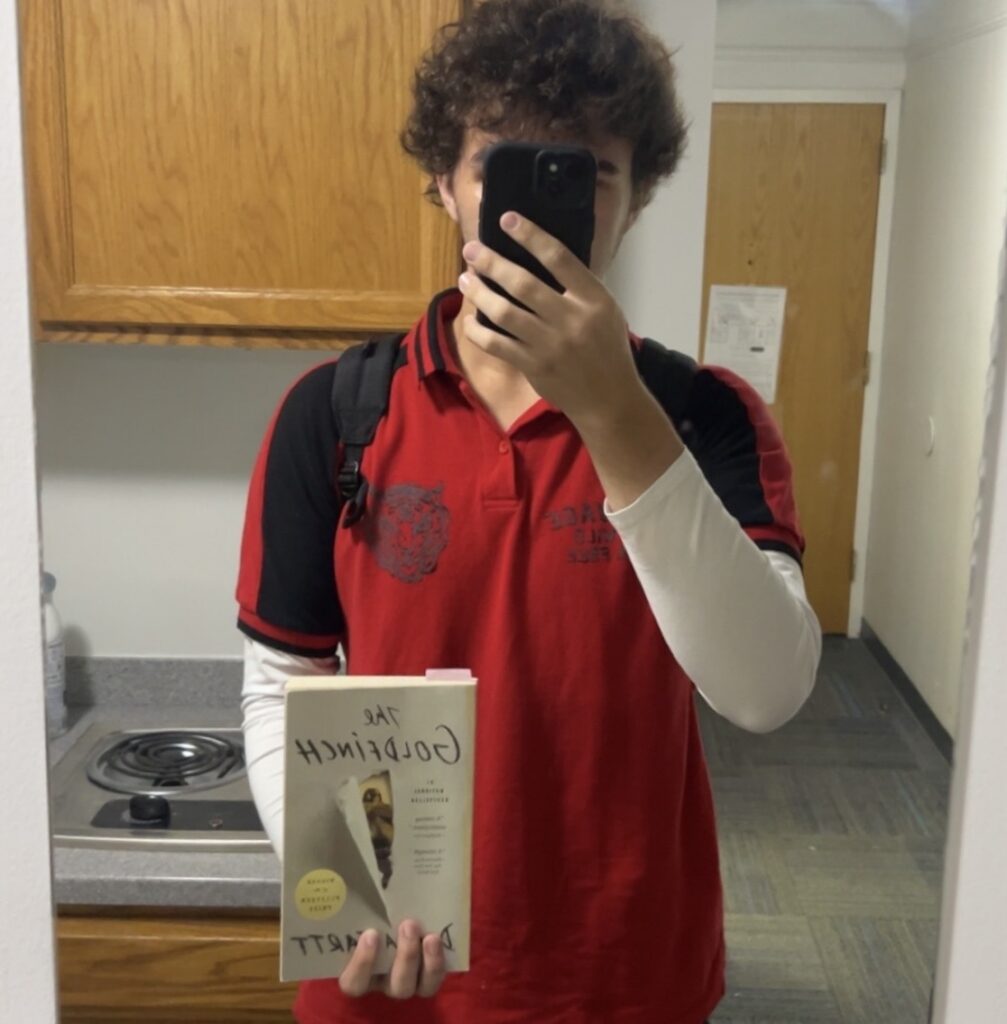
Hopkins and I never had a meet-cute. I cannot write a lie, even if it would make for a more romantic story. It was not love at first U.S. News and World Report College Rankings Google search, nor did I have two parents who met at Hopkins and fell in love on campus, infusing my very DNA with Blue Jay pride. As best I can remember, it was almost midnight the day applications were due, and I had just gotten off my evening shift at Coldstone Creamery, where I was a shift lead taking too many hours on top of college apps, school, and miscellaneous obligations. I smelled like ice cream and waffle cones, but that’s the most romantic detail I can claim.
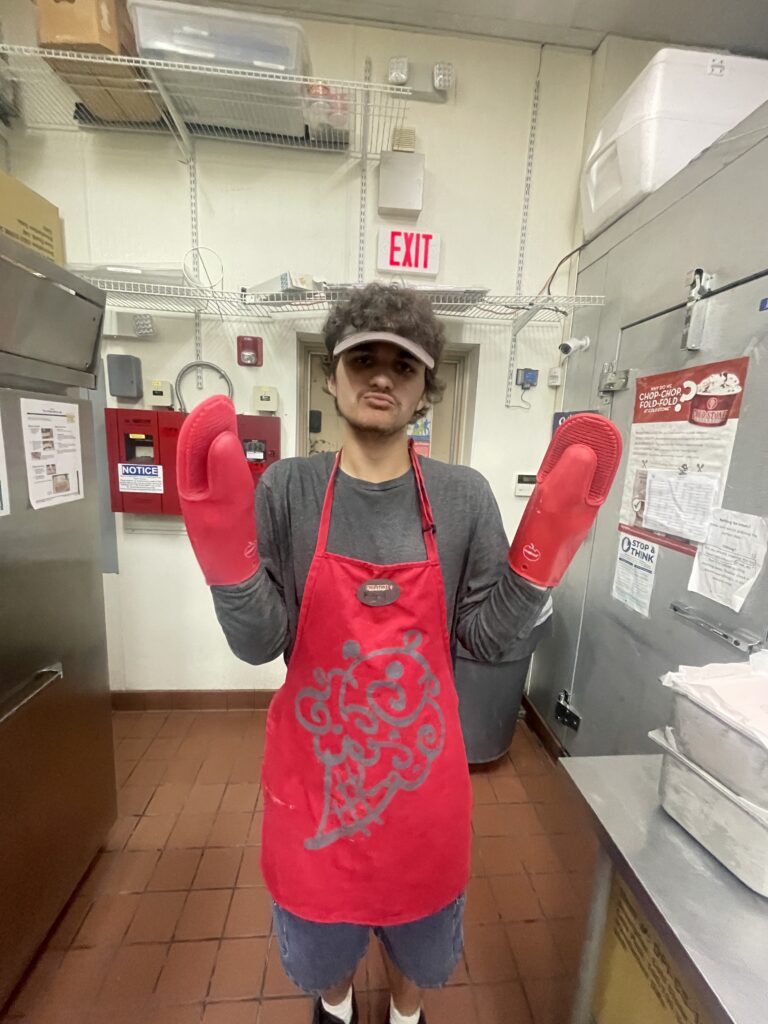
Why submit it past 11 p.m. following a long evening shift? In fact, as I laid in bed with my laptop, I didn’t even change out of my uniform: red apron, visor, jeans, and a long-sleeve Coldstone tee.
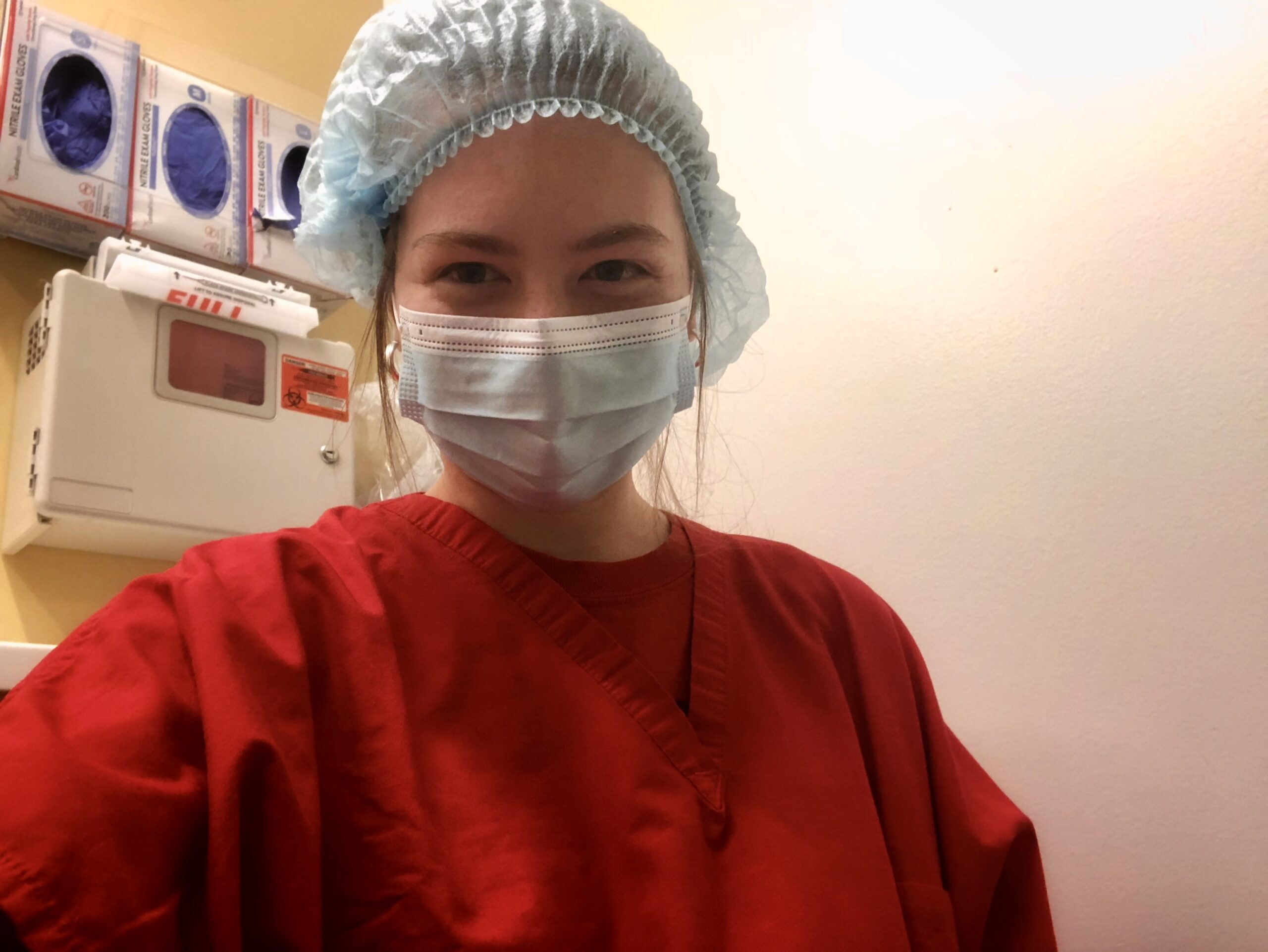
Here comes another bombshell: while I write to you as a Writing Seminars/English double major, it was not always this way. In high school, I wanted to be pre-med. So, Hopkins pinged on my radar as the prototypical, quintessential pre-med nest. At the same time, I knew I wanted to continue my English/creative writing studies, so I cross-checked my colleges—Are they good for pre-med? Okay. Are they good for English or creative writing?
Hopkins was one of those schools that not only passed but did so with flying colors. The Writing Seminars is the second-oldest creative program in the United States (the oldest being the University of Iowa). Hailing from Kansas, I knew peers who defected to Iowa for their undergrad in favor of the expected KU or K-State. I believe we all considered it exotic when someone made it to Iowa, similar to Arkansas, or sometimes even Colorado.
That being said, while I had a reverence for Iowa—especially the Iowa Writers’ Workshop, its graduate creative writing program—I held suspicions that the MFA faculty wouldn’t be teaching all of the undergraduate creative writing courses. At Hopkins, however, that unlikely dream came true. Earning its name from the department’s promise to harbor only seminar-sized classes—no lectures!—The Writing Seminars is like an intimate party that every prospective major, minor, or elective-taker is privileged to enjoy. After the Introduction to Fiction and Poetry sequence, which are taught by some of the nation’s flagship graduate students in creative writing, Writing Sems classes are led by the same professors who instruct those grade-A grad students. Speaking from Writing Sems, though I believe the same applies to most humanities at Hopkins, you are receiving the same education as graduate students from your first day as a first-year student. (My First-Year Seminar, Bringing the Past to Life With Poetry, was taught by the current Writing Seminars chair, Dora Malech.)
That same near-midnight I got home from work and bit the bullet to apply to Hopkins, I scrolled through Hopkins’ online academic catalogue simply to find what to declare as my intended major. I will admit I was charmed, though more was yet to come regarding the gifts Hopkins held in store to woo me into applying. Still, the question lingers, why Hopkins? What was that all-at-once sensation of realization, like that “drops on a penny” experiment—when did the surface tension finally explode?
There’s no point in being coy with the fact because even Hopkins has no way to hide it from the global eye: research. I am nothing if not obsessive, or at least when it comes to interests and passions. I needed a school that would enable me to chase down academic rabbit holes and exsanguinate texts, a school that might even fund this. Enter Hopkins.
As America’s first research university and national leader in federal research/developmental funding, Hopkins may first evoke STEM laboratories and all its glass, metal, or chemical accoutrements. However, that helping hand also reaches the arts and humanities.
From day one in my First-Year Seminar, I was exposed to humanistic research as I investigated object histories with Hopkins Museums Curator Michelle Fitzgerald to write a poem depicting one artifact for an exhibit in Homewood Museum. By the end of the year, my research opportunities caught like wildfire into not only a summer research internship at Homewood Museum, but also a Hugh Hawkins Research Fellowship—for Hopkins institutional history—in the following academic year.
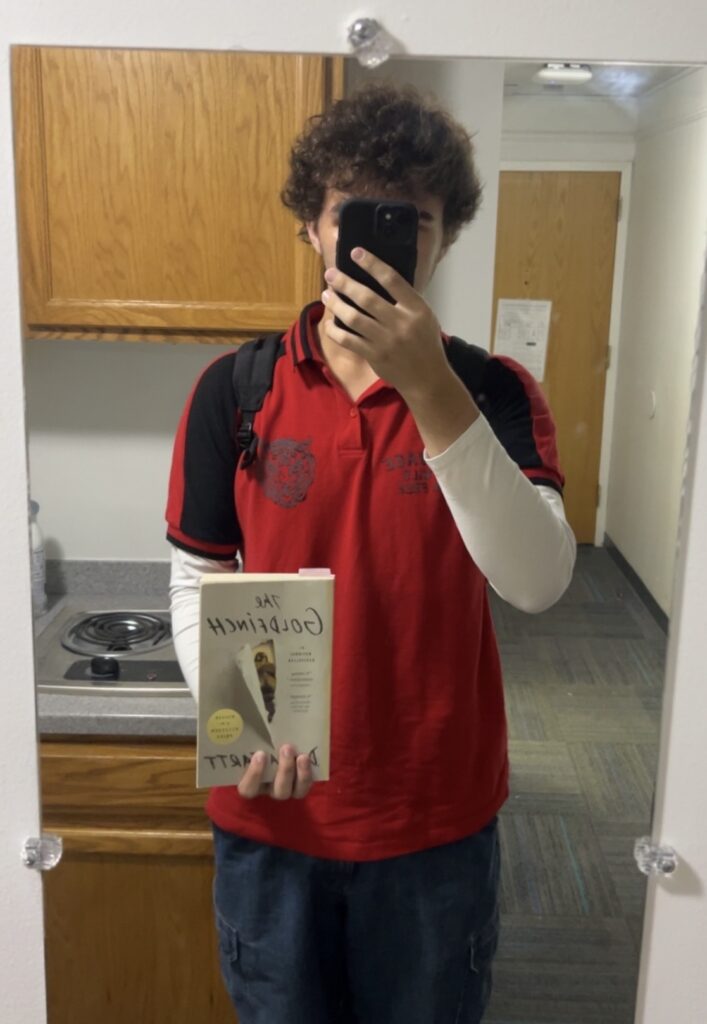
Back to that fateful night, the one that started after I closed the register at Coldstone and drove home to debate if I should apply to Hopkins or not. I remember being tired, having not eaten dinner. Condensed into one slogan, my decision to apply to Hopkins sounded like: “Come for pre-med, stay for the arts, humanities, and research.” But take it from someone who is no longer even pre-med: Hopkins is a place worth staying no matter what you study because it will support you to the fullest in every field.