I was not planning to go to the lacrosse game. I had been invited to a surprise party for the boyfriend of the friend of my girlfriend, and so I was to stay, whether I liked it or not, hidden in a bedroom with three people I didn’t know, several birthday balloons, and a 15-patty Whopper. The boyfriend was to open the door and jump and maybe scream and then laugh mirthfully at being the surprise center of attention and receiver of balloons; and most importantly, destroyer of the most ridiculous tower of protein I will ever see. But at ten past the boyfriend was not there yet. The small talk with the other partiers had already been made. The only movement was the balloons, wobbling softly to a subliminal tremor that could have one origin.
We had to go, right then and there. Leaving the apartment building was a rush. The midday sun screamed down University Parkway and crowds of fans transited up and down the street. I could see through the back gate all the way to Homewood Field itself, and there a real player, wolverine helmet and all, rushed past. FOMO is a wonderful thing; never forget this. Somebody will turn 22 regardless, and that Whopper has the mass of a small star, it will not be going anywhere either. But this spectacle is rare.
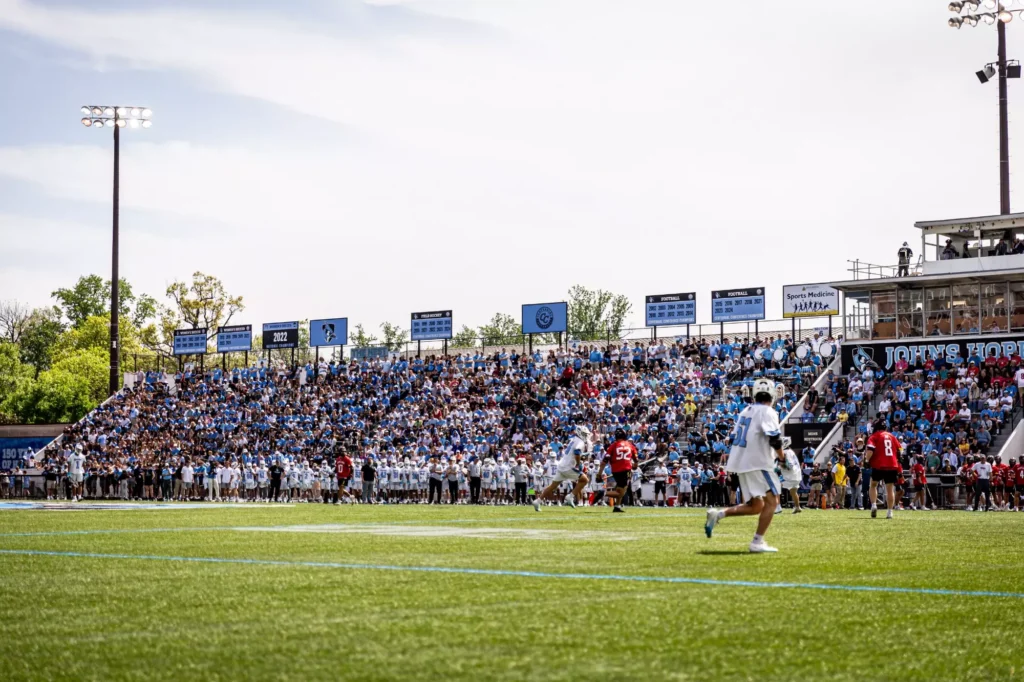
I had never seen Homewood Field as it was that day. The field, and the Cordish Lacrosse Center next to it, constitute Hopkins’ portal to Division I—its athletic peak on the high northern plateau of campus. In April, the Homewood field is buried under a crowd 7,508-strong, pulsing and shimmering miraculously under a searing sun. And food trucks sell crabby things, and there are a full 60 people still in line for tickets ahead of you. And—in case you still weren’t convinced that Hopkins was capable of true division-form—you notice that, after all, we were winning 2–0. This information I gained from the actual scoreboard. I had made it in.
Before I got to watch the game, I had to make it to the bleachers. Every route seemed to involve a lot of awkward squeezing, and when I finally made it 10 minutes and two goals later, I was rewarded with a sliver of a view above someone’s shoulder.
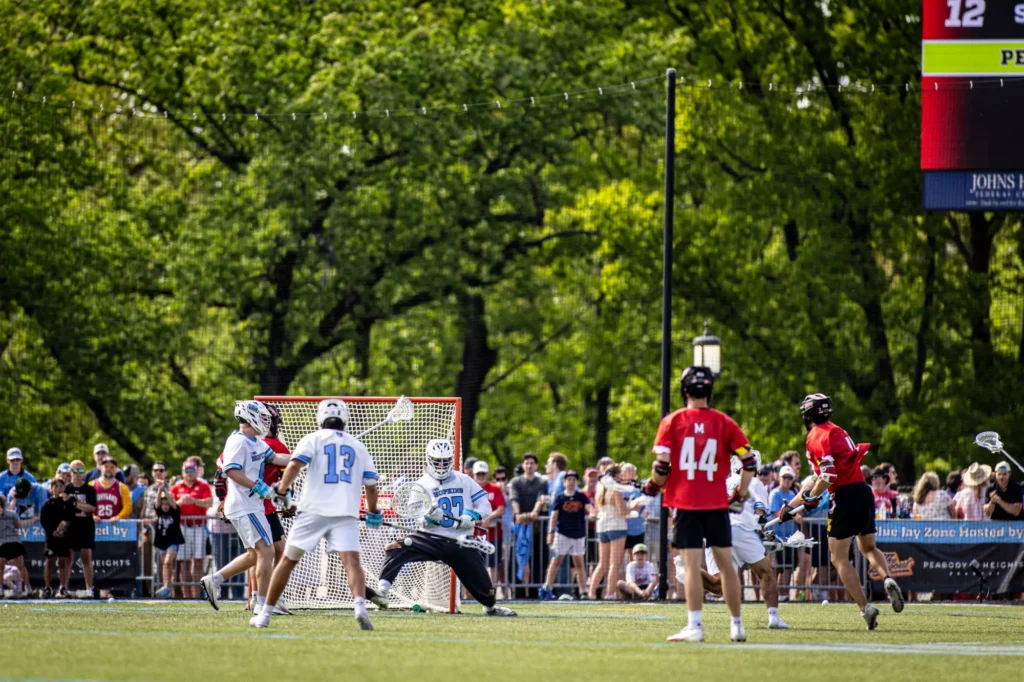
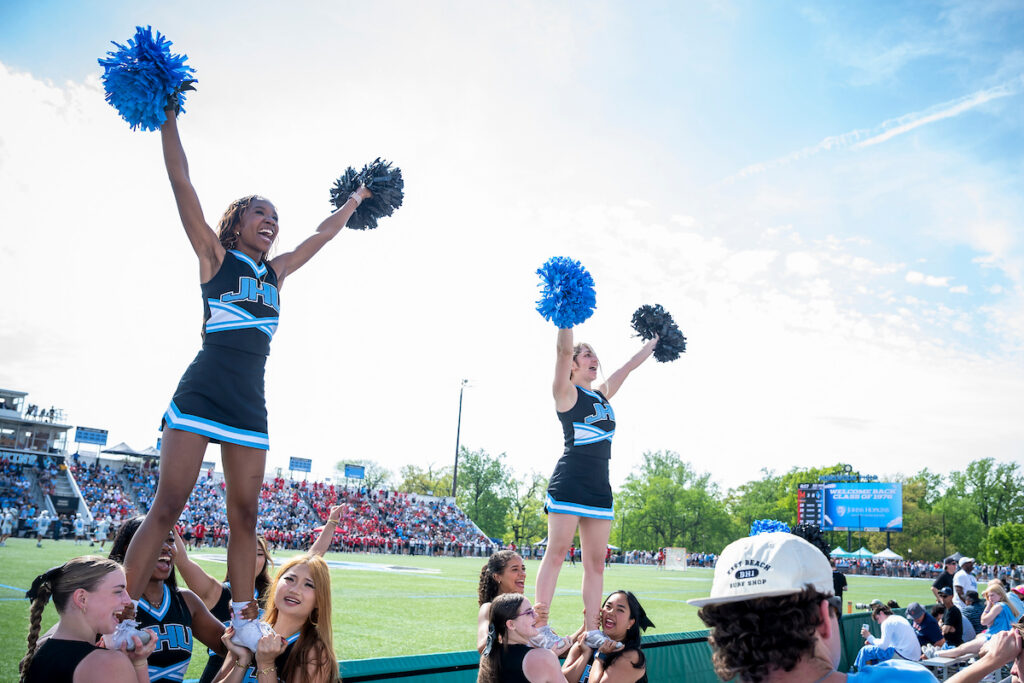
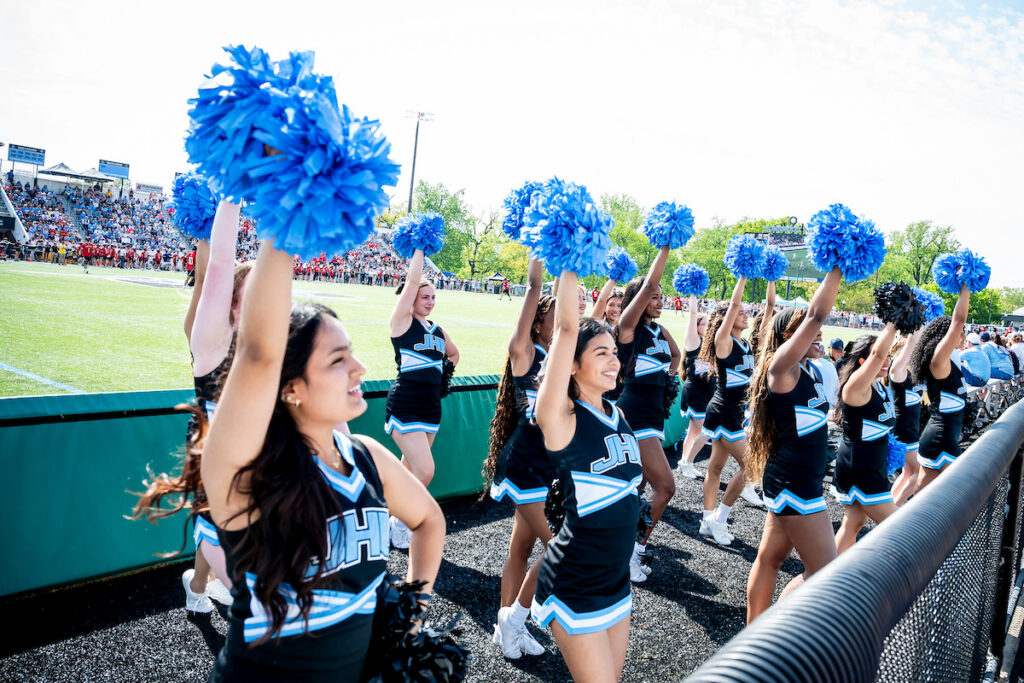
But even through my small window, I was seeing Division I. I could see it in the way the game had a sense of place—thousands of Marylanders opposing us in the other bleachers, all in red, their children all in red, the whole family screaming. I could see in the fact that we were screaming back at them, led by cheerleaders I didn’t even know we had. And I could see it in the play. In the streaking attackers, the seamless shifting of defensive assignments—and in our #4, drifting quietly behind the goal. For a time, he waited, shoulders unstressed, a world apart from frenetic passing in front of him. And then—deftly as a leaf shifting on air currents—he sprung forward, caught a pass, and swung it back into the goal.
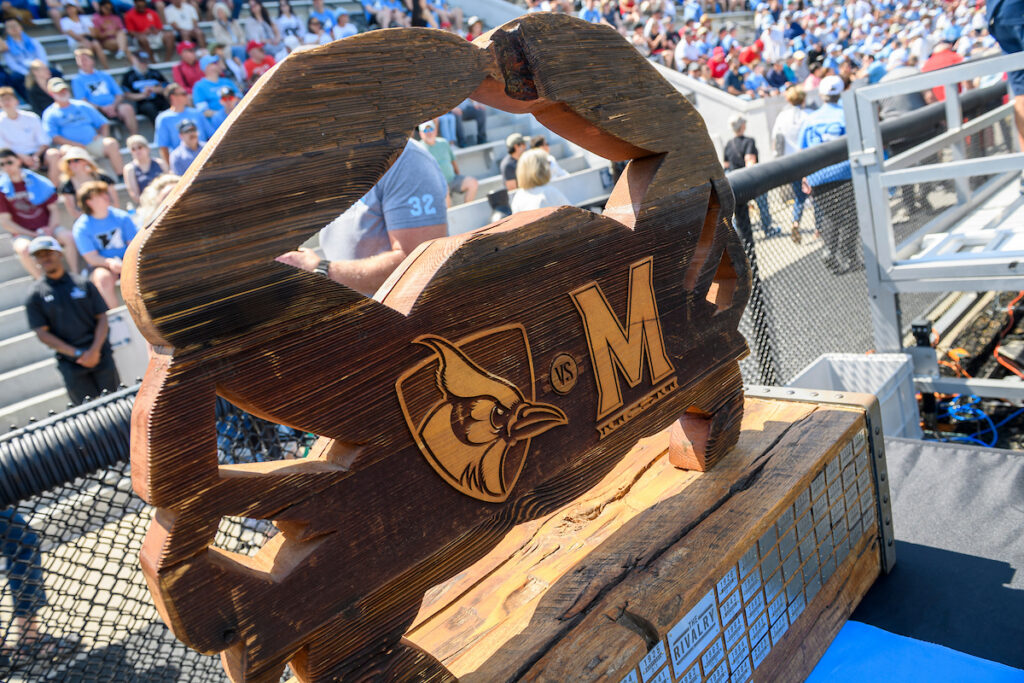
The Johns Hopkins University vs. University of Maryland, College Park lacrosse rivalry is easily the most storied in the sport. Played between two perennial powerhouses in the nation’s (and the world’s) lacrosse heartland, it dates all the way back to 1895—or 1924. We recognize the seven games contested before Maryland lacrosse became a varsity sport in 1924; they do not. Respectfully, we will forget those games in this article: the all-time record is then 69-51-1, in favor of us. (Don’t worry, I will oblige you. The tie happened on May 16, 1952, at Homewood, before college lacrosse implemented a sudden-death rule. It is hard to find enough information to recreate the drama. Wilson Fewster was the Hopkins coach?) Since 1973, when my Wikipedia page begins to attach national rankings to the teams, the winner of the Hopkins-Maryland matchup has been the number one team in the country 13 times. “The stands are gonna be packed” said former Maryland attackman Matt Rambo about the rivalry, “All the alumni are gonna come to the game…the rivalry is more than 100 years old…we have to prepare extra hard because we don’t want to lose to Hopkins. We don’t like Hopkins.”
Well.
The goals come in waves in the 122nd matchup, but neither team can pull away. We hold them scoreless for long stretches, but then they do the same to us. 5–2 is promising, but it falls to 6–5, and 8–5 becomes 8–7. Then with 2:28 left in the fourth quarter, #16 in blue comes around a screen and fires a ball that should decapitate the screener, except the screener has ducked. 9–7. We go crazy, then quiet. Two minutes left. Then one. Then just as our side begins to buzz, #33 in red transcends all that careful cutting and probing; he fakes a shot, spins right, and it’s 9–8. People sit down harder, grab the railings, restrict their breath. The ball goes back in play. We leave the guy who’s been missing all game open, and he does just that. 30 seconds. They miss again: 20. This is the final possession. The Maryland player sprints in; then spins, he’s seen something. Two steps downfield and then he fires it up over everybody to the opposite side, where 45 in red has been waiting, unseen. He cocks back his stick—and the post sings. The ball is out of the goal, over in the corner, harmless. One of our guys runs over and throws it high into the air. At some point when it is still about 40 feet up, time expires.
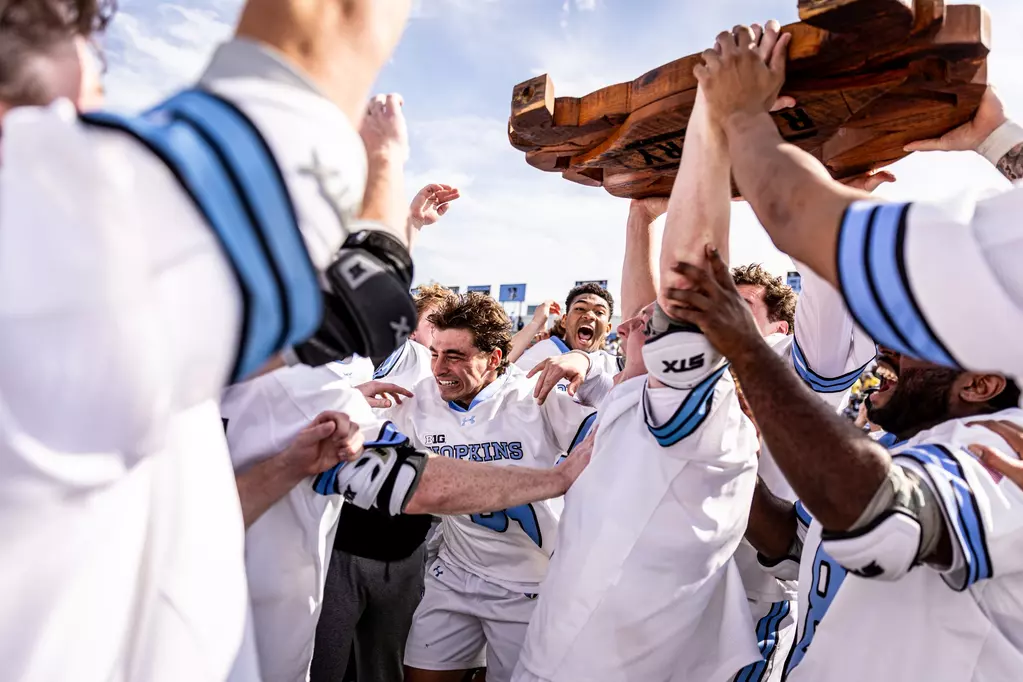
Blue Jays take 122.
Photo Credit: Marty Corcoran, Will Kirk