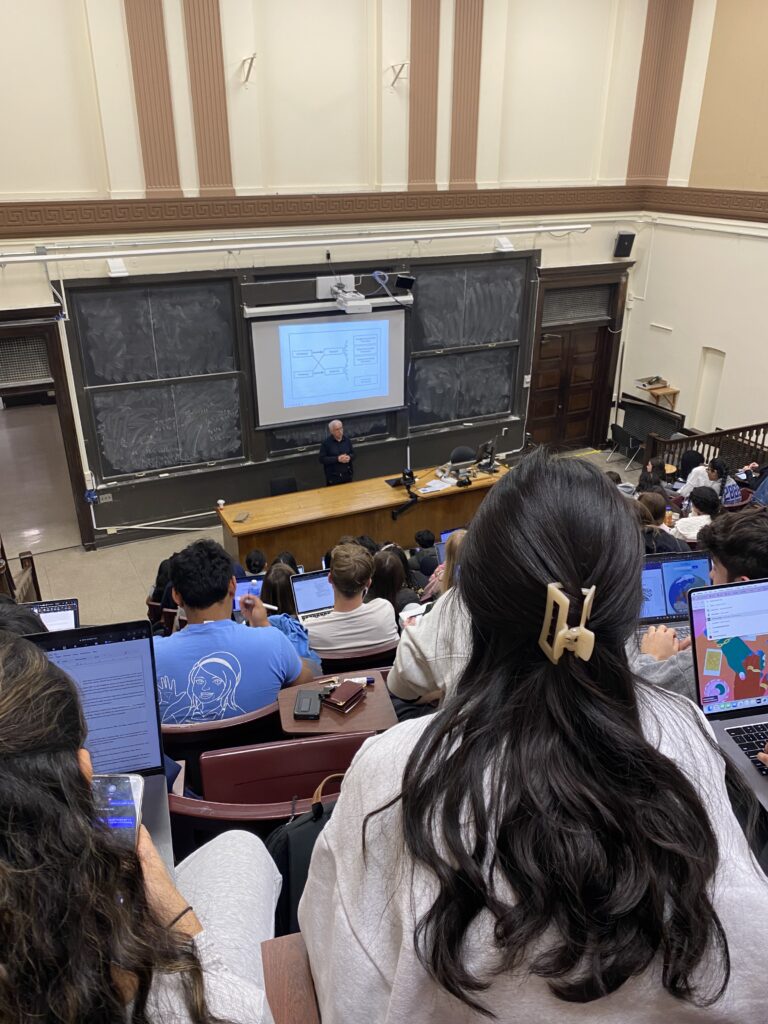
Now that I’m a senior and I’ve fulfilled nearly all my pre-requisites to graduate, I’ve been able to take many unique classes just for fun. I’ve got a list of courses about a mile long that look exciting, so maybe you can add some of the ones I’m currently taking to your wish list!
Introduction to Cognitive Neuropsychology
This is a three-credit, introductory-level class that I think people from any major would find interesting. We cover things like brain damage, brain imaging, the visual system, and memory/amnesia. The teacher even brought a real human brain to class for us to look at!
Cognitive neuropsychologists study people with brain damage or neurological disorders to help understand normal cognitive processes. We learn about a variety of individuals the teacher actually worked with, so it’s cool to see real results and videos of different experimental tasks. The most interesting case study we’ve talked about so far revolved around a former undergraduate student at Hopkins. Our professor ran different tests with her for three years after she mentioned to him that she always struggled with spelling. Now, we get to see some of his conclusions and understand the purpose of this research.
There are consistent quizzes and two homework assignments to make sure you keep up with the readings. The best part of all is that there’s no final. So, if you’re looking for an early flight back home, this is the class for you.

Human Sexuality
This three-credit class is like nothing else I’ve taken before. We cover everything from sexual orientation to attraction, anatomy, relationships, and sexual disorders. I really like the relaxed, seminar-style way the course is taught. Since there are no exams or quizzes (only written assignments and essays), we’re encouraged to sit back, listen, and contribute to class discussions.
The professor of the course, Dr. Kraft, is a clinical/research psychologist at the Sex and Gender Clinic in the Department of Psychiatry at the Johns Hopkins School of Medicine. He also works closely with Hopkins medical school students and residents. He’s a really engaging teacher with plenty of interesting stories and thoughts to share.
We’ve read two books covering men’s and women’s sexual health. Each week, we engage with articles and videos covering different topics. For our final assignment, we get to interview people from our lives about material from the course. There’s also a guest speaker, but they were unable to come this semester. I won’t spoil who it is though; you’ll just have to take the class to find out!
Third-Year American Sign Language (ASL)
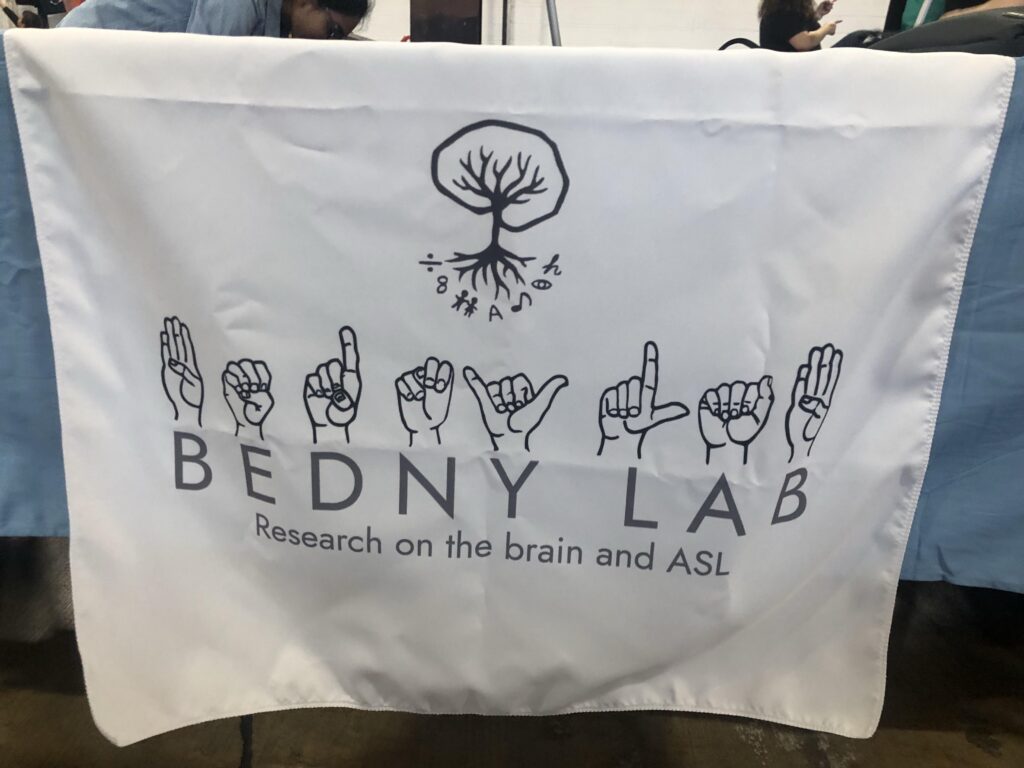
ASL is one of my favorite classes I’ve taken at Hopkins. Not only do we learn a new language, but we also learn about Deaf culture. I’ve gone to a few different ASL events, made friends, and found my research lab through this class.
Now that I’m taking my third year of ASL, we’re focusing a lot on carrying higher-level conversations in ASL. I’ve given two presentations and led a class discussion on ASL linguistics. In one of my presentations, I analyzed three different pieces of artwork made by a deaf artist. I never thought I’d be able to explain how the girl in one of the paintings was rowing a boat in search of a better world where deaf children are no longer forced into speech therapy education, but I did it (with lots of practice)!
It’s been very rewarding to see my skills improve each year. Our class is tiny too—only three students in total. Because of this, we each get a lot of individualized attention, and we’re all very close. We play tons of games, learn different dialogues, and explore a new culture. I’m always looking forward to this class.

Human Memory Psychology
As part of my neuroscience degree requirements, I have to take 12 credits of upper-level classes in my chosen focus area. Since I’m focusing on cognitive neuroscience, most of my classes overlap with psychology upper levels. This led me to Human Memory Psychology.
Each week we cover a new topic relating to memory. We’ve looked at things like brain imaging, memory in the courtroom, forgetting, and episodic memories. Since this class is long (2.5 hours, once a week), we do group activities each week. My favorite so far has been a staged-event memory experiment on campus. It was pretty similar to doing a scavenger hunt, then being tested on our recall of events.

This class is also pretty laid back with weekly quizzes, activities, and presentations. Although it’s lengthy, it’s an interesting topic that dives deep into current research.
Reproductive Physiology
Speaking of current research, no class emphasizes that topic more than Reproductive Physiology. I highly recommend taking this at the same time as Human Sexuality because you’ll look at some of the same topics from different perspectives. For example, in Reproductive Physiology, we learned about male/female infertility research, treatments, and biological pathways. In Human Sexuality, we talked about how infertility can influence self-esteem, relationships, and sexual functioning.
This two-credit, upper-level class has a unique format. Nearly every lecture is taught by a guest. Not every speaker is a professor either. We’ve heard from researchers and urologists at the Johns Hopkins Hospital. Each lecturer is extremely passionate about their topic. They’re also very dedicated, even teaching over Zoom sometimes.
I’ve found this class especially interesting because we discuss current research in this field. We’ve learned about topics like male birth control, hormone replacement therapy, and cancer. Between this and Human Sexuality, I’ve always got a few shocking facts to tell my friends.
Research
I’ve been doing research in the same neuroplasticity and development lab since my sophomore year. To receive research for course credit in the neuroscience department, there’s a certain number of hours in the lab you must hit, along with completing a survey and writing a summary paper. We also have weekly meetings, but everyone understands that undergrads might have class during this time.
Research is a lot different from normal classes because there’s no exams or lectures. Instead, you’re either working on your own project under a supervisor or helping someone else with their project. There’s a lot more flexibility with scheduling. This semester, I assisted with a graduate student’s project by testing participants through the SONA system. SONA is an online platform used by the psychology department to organize participation in studies. Lots of psychology classes here will give students extra credit for participating in studies. We need people, and they need points, so it’s a win-win!
I’ve really enjoyed my schedule this semester. It’s been refreshing to step out of my comfort zone and deepen my understanding of different topics. I highly recommend taking classes you find interesting, even if they aren’t required for your major. Hopkins has a lot to offer in every department, so don’t be afraid to try something new!