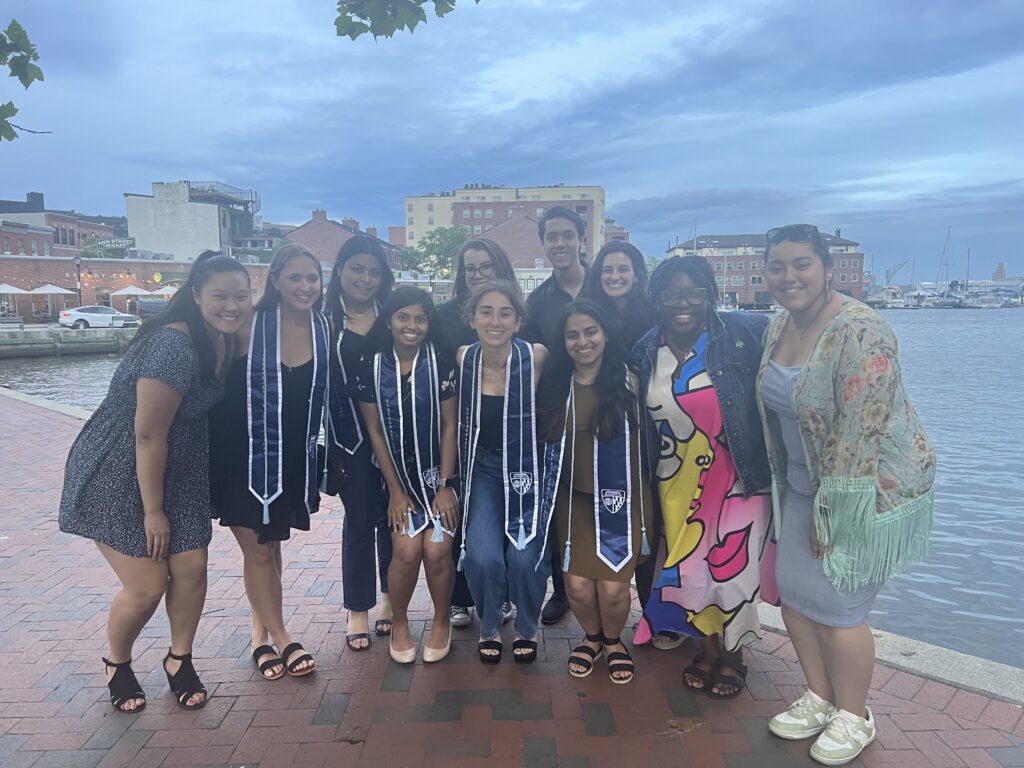
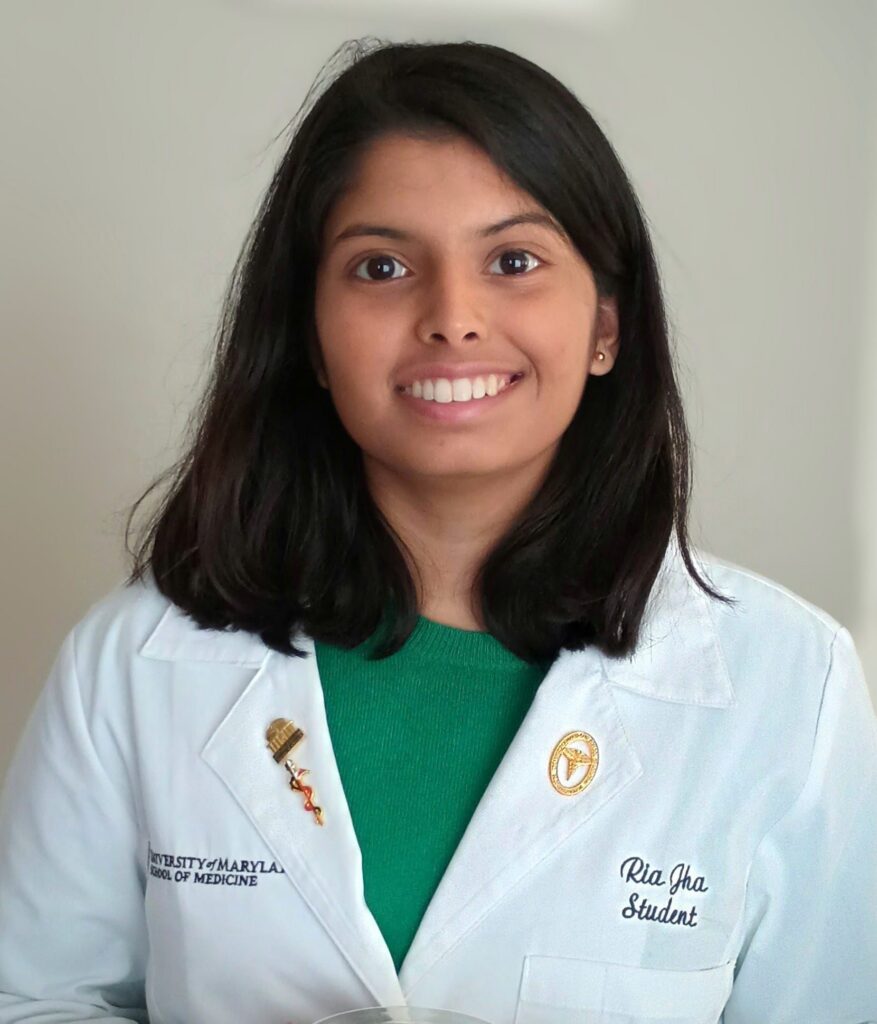
Anishka B., ’26 spoke with BME alum and current medical student Ria Jha ’23 about her path from the BME 3+1 program to medicine, including Design Team and patent work, research and volunteering, mentorship, finding community, and exploring Baltimore.
This interview has been edited for brevity and clarity.
Anishka: My name is Anishka. I’m a senior at Hopkins majoring in biomedical engineering (BME) with minors in computer science, computer-integrated surgery, and robotics. After graduation, I’m staying an extra semester to get my master’s in robotics. I’m interested in surgical robotics and work a lot in the Lab for Computational Sensing & Robotics with systems like the da Vinci and the Virtuoso robot—teleoperable and autonomous surgical systems.
Ria, can you share what you studied at Hopkins and what got you into it?
Ria: I majored in biomedical engineering and did the 3+1 program, so I got my master’s as well, which was incredible.
I’m originally from the suburbs of Chicago, so I lived in the Midwest my whole life and came to the East Coast for college. When I was in high school, I really enjoyed all my STEM classes, and that’s why I chose BME because it combined all my favorite classes into one major. Hopkins has the best BME program in the country. I visited campus and I met so many students who loved the program and were so friendly and welcoming, and I felt like I really fit in. I was interested in premed, but I wanted to explore all the things BME had to offer.
Anishka: What was your experience on Design Team?
Ria: I joined my first Design Team freshman year with about five upperclassmen. It was a great way to dip your toes into engineering innovation as a freshman, and the mentorship was excellent—from upperclassmen to clinical mentors from the School of Medicine.
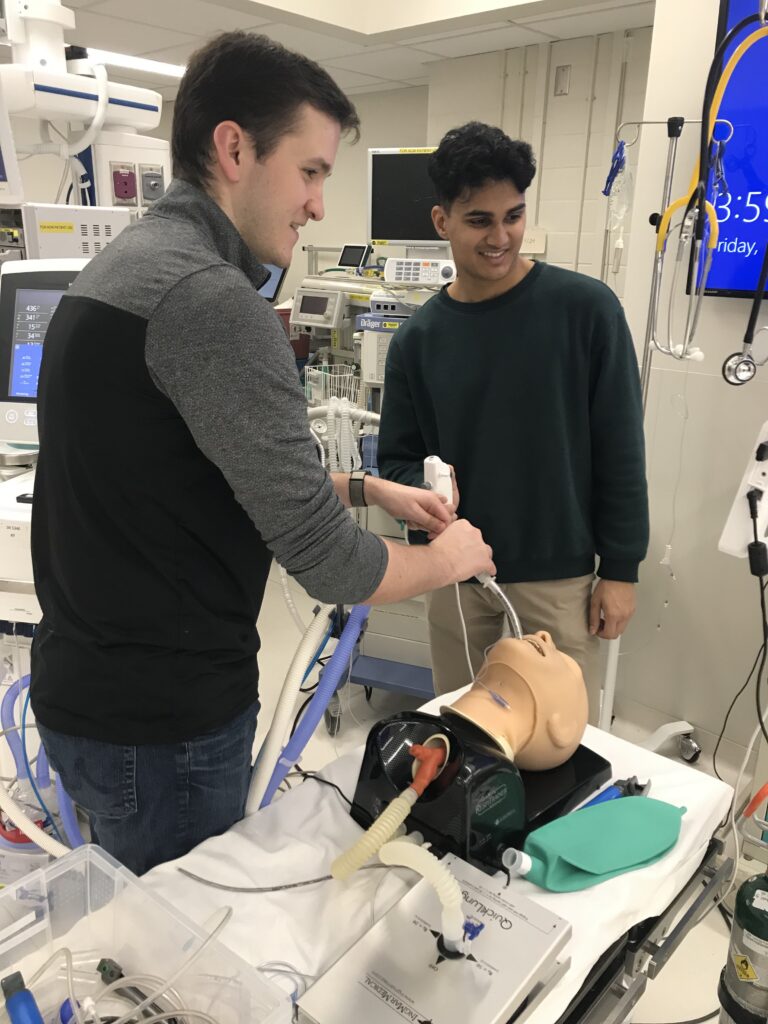
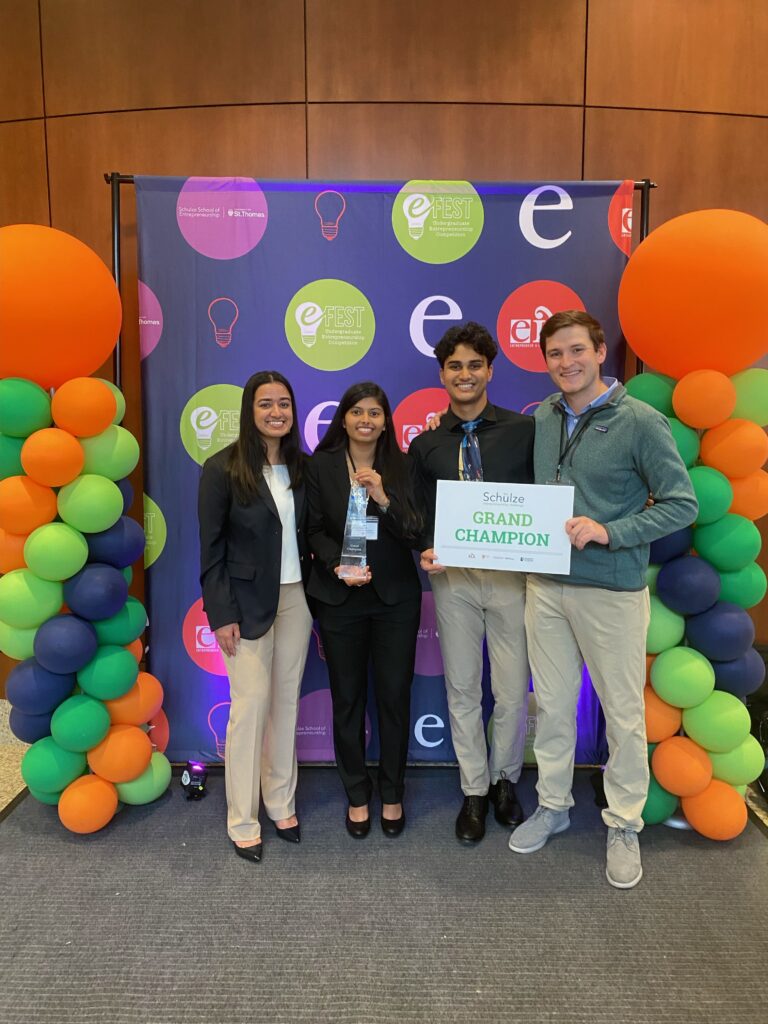
Later, junior and senior year, I joined another team as a member. That one was very successful too, and I got to delve more into the business side: competitions, raising money, and pushing the product forward. We were able to file a provisional patent, and we’re now in the process of getting a nonprovisional.
Anishka: You’re still working on your senior-year Design Team project?
Ria: Yeah. I was part of OnPoint Ventilation. All our members have graduated, but we’re all invested. Some are in consulting, while some are more on the engineering/tech side. I’m in medicine now, but we still come together for the project. It is a very cool experience.
Anishka: You mentioned you’re now in med school. A lot of pre-meds typically major in molecular and cellular biology or neuroscience. How do you think being a BME major uniquely positioned you for med school?
Ria: With medicine, there’s no formula to get in. I feel like these days they’re also looking for a lot of non-traditional students, and they like to have a very diverse class.
I have classmates who did biology or public health, and that’s a strong foundation, especially early on. But I also have classmates who did engineering, theology, or took gap years doing completely different work like construction.
All that really matters is getting prerequisites done, doing okay on the MCAT, and balancing everything. I think it’s very doable in BME at Hopkins. Engineering is considered a tougher route, but we’re well supported in maintaining grades while meeting pre-med requirements. The curriculum is integrated well—planning MCAT timing and prereqs never felt like a problem.
Engineering gave me a great work ethic and a problem-solving mindset. With Design Team, I learned how to find the root cause and build solutions to address it. I found medicine to be similar…it’s problem-solving, even if people don’t initially see it that way. I really appreciate the background and wouldn’t change my choice.
Anishka: Is there a specific field of medicine you’re hoping to go into?
Ria: I came in thinking surgery because I’m very hands-on, and I liked that in engineering too. But now I’m a third-year finishing rotations, and what’s resonated most is internal medicine. People think it’s just rounding and talking, but the mindset feels very similar to engineering.
You have a person with a complaint, and there are so many possible causes—so how do you break it down? It’s algorithmic, and I really appreciate that. It aligns with what I enjoy, and it’s a way to help a lot of people.
Anishka: What clubs or organizations were you involved in at Hopkins?
Ria: I wanted to get involved in research early on. The advice I give people is to try to align your goals with the lab you’re trying to join. There are so many positions and so many different kinds of labs you can get involved in, and there are a lot more positions than students.
There are wet labs, data analytics/CS labs, public health labs—anything. Cathy (the best BME advisor) would email opportunities freshman year, which helped a lot. Cold emailing also works.
I joined a wet lab (which can be slower for publishing), so if your goal is faster papers, data/CS can move faster. But wet lab is a fabulous experience for building foundational skills.
I was in the Searson Lab in the Institute for NanoBioTechnology (INBT). It was interdisciplinary: chemistry, materials science, but also biology and public health. They focused on my goals: what I wanted to learn, what I was interested in. I got hands-on experience, presented at conferences, and published papers. It was a great experience.
For volunteering, I joined a sustainability club called SHARE freshman year. We went into Johns Hopkins Hospital and collected unopened, sterile supplies that would otherwise become medical waste. We boxed them up and shipped them to countries that needed them. It was a really cool experience, and the SHARE volunteers were an amazing group.
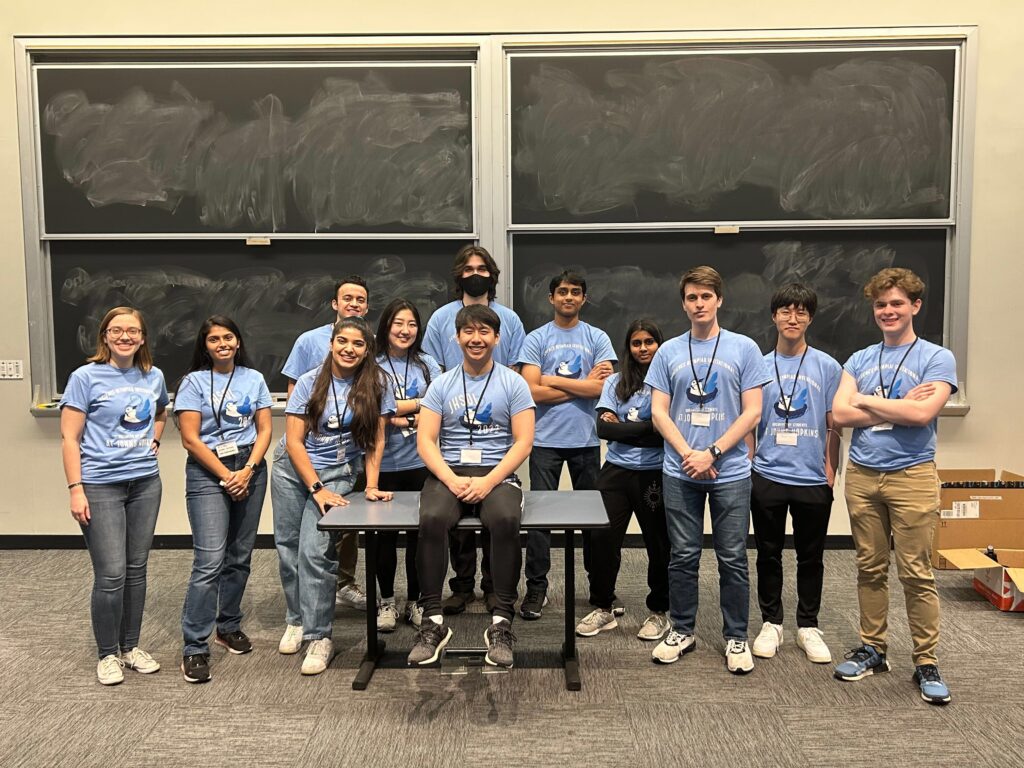
I also loved Maryland Science Olympiad (MSO@JHU). I did Science Olympiad in high school, and at Hopkins I stayed involved all four years. Science Olympiad has events like building challenges, chemistry lab events, and written exams for middle and high school students. My favorite event is forensics, where students have to use their science knowledge to solve a crime scene. In college, I helped write and run events. Senior year, I was on the executive board and served as lab director, and we hosted the Maryland state competition on the Hopkins campus. Students ran everything. It was one of my favorite experiences and something I have continued to stay involved in as a volunteer even in med school.
Finally, Blue Key Society was very close to my heart. I was in it all four years, and senior year I was the Daily Visit Student Coordinator, putting together schedules and coordinating tour guides.
Coming into college I was afraid of public speaking, so I intentionally put myself in an uncomfortable situation to get better. I loved it. You meet so many people from different backgrounds, and you get better at presenting yourself and talking.
Anishka: I totally agree, especially with Blue Key. I remember being a first-year student, walking around the Student Involvement Fair looking at different clubs. Someone from Blue Key approached me and asked if I wanted to be a tour guide. I shut it down so fast because I couldn’t even find my way around campus. But they were so welcoming and reassuring, so I signed up. The training helps a lot, and it really helped my public speaking too.
The hidden perk is meeting prospective students who are excited to be here reminds you why you came.
Going back to academics, did you have a specific faculty member or mentorship experience from Hopkins that helped guide your career path?
Ria: First year, Cathy Jancuk was great. Later, once you choose a BME focus area, you get assigned a mentor. For cell and tissue engineering, my mentor was Dr. Grayson (bone lab). I got coffee with him and talked about life and where things were going. He gave great advice even though I wasn’t doing the PhD route.
I also got a lot of guidance from upperclassmen in clubs. They’re a huge resource for advice on classes, exams, and navigating changes in the curriculum.
For pre-med, members of my lab were also pre-med, so they helped with application advice and essays. I was also a Hodson Scholar. It’s a scholarship group that was why I was able to come to Hopkins in the first place because they’re very generous with aid.
We had a pre-orientation program, so they were the first people I met on campus before orientation week. We visited different neighborhoods in Baltimore and learned all the tips and tricks on how to get around the city using local transportation. It was a great introduction to the city and campus, and I’ve kept lifelong mentors from that group.
Hopkins also has strong pre-professional advising. Early sessions outline what you need for med school—prerequisites, research, MCAT planning, etc. As you get closer to application season, you can schedule meetings with the advising office and ask questions like “What should I be doing to apply right now? Am I missing something from my application?”
The Writing Center helped a lot with application essays too. That was very, very helpful for me when I was applying. There are just a lot of great people to talk to, a lot of great resources. I felt very well connected.
Anishka: I’ve definitely tried to take advantage of some of the resources here on campus. The Writing Center is a big one and even the Learning Den was a big one for me my first year because it was drop-in. I would go whenever I had a question and the students that ran it are so smart.
Ria: PILOT was a lifesaver for me, especially for Orgo. I had the best pilot mentor, Bruno. He was a genius and he literally saved me in Orgo because that class was difficult. He had all the tips and tricks.
Anishka: You talked about the people that you met in your Hodson Scholars group and your lab. How did you meet some of your closest friends, and are you still in touch with them today?
Ria: I didn’t know anyone coming in. I visited during what used to be called SOHOP,where you would visit as an admitted student and stay overnight in one of the dorms. I met a girl there, and we hadn’t accepted our offer yet, but we were interested in Hopkins.
Then we randomly met again during move-in—we were both moving into AMR II. Day one we were best friends. Orientation week makes it easy: ice cream socials, meeting neighbors, dining hall introductions—there are so many opportunities to meet people and just talk.
During Orientation week I met a lot of people, but I really stuck with the one person that I randomly happened to meet during SOHOP. Throughout my first semester, I randomly met a bunch of people. Our friend group grew to about 11 people. We’d book Brody Learning Commons Room 1030 every day—whiteboard walls, huge windows, the biggest room. We lived in that room. It was incredible.
I’m still friends with many of them. We have a group chat and still hop on Discord to talk.
Anishka: I had a similar story. When I was moving in, my dad started talking to these other parents, which felt so embarrassing. Their daughter was in the AMR II lounge. So, they called her up and said there’s this other BME student you can come talk to. We started comparing schedules and we had exactly the same schedule, even our electives and discussion section. I’m still friends with her today. I was so embarrassed that my dad was talking to other people in the courtyard, but he lowkey made me my first friend at Hopkins.
Ria: That’s so sweet. The girl I met was also pre-med—we had similar interests and backgrounds. It felt like meeting my twin from a different state.
Anishka: I feel like that happens with most people where it’s very random stories of where they meet people at Hopkins.
Ria: I remember at the very beginning, it was just me and my friend. We randomly met these people in the dining hall and were like, “Hey, do you want to go study in Brody after?” I was like, “Yeah, sure, why not?”
It was almost midnight, and one of the guys goes, “Wait, it’s my birthday at midnight.” We were like, “Wait, it’s your birthday—and you forgot?” So, we ran over to Charles Street Market right before it closed, got a cake, brought it back, sang happy birthday, and had him cut the cake.
Then it was fall break, and we were like, “What if we went somewhere for your birthday?” We planned a trip to DC the night before and went. It was one of the most memorable experiences I had my first year. We became a close-knit group and slowly added more people, but that was our core initial group—just, “Let’s go experience the city together for the first time.”
It’s a great bonding experience—not just DC but going around Baltimore and exploring the city with people is a great way to connect and create experiences together.
Anishka: That is awesome. My friend group always tries to plan trips during fall or spring break. This year, we planned a trip to Romania and Hungary for spring break.
Ria: That’s so cool. Our senior year spring break trip, we took the Amtrak up to Boston because one of my friends lives there. We stayed at her house for a couple days and hung around Boston. It was awesome.
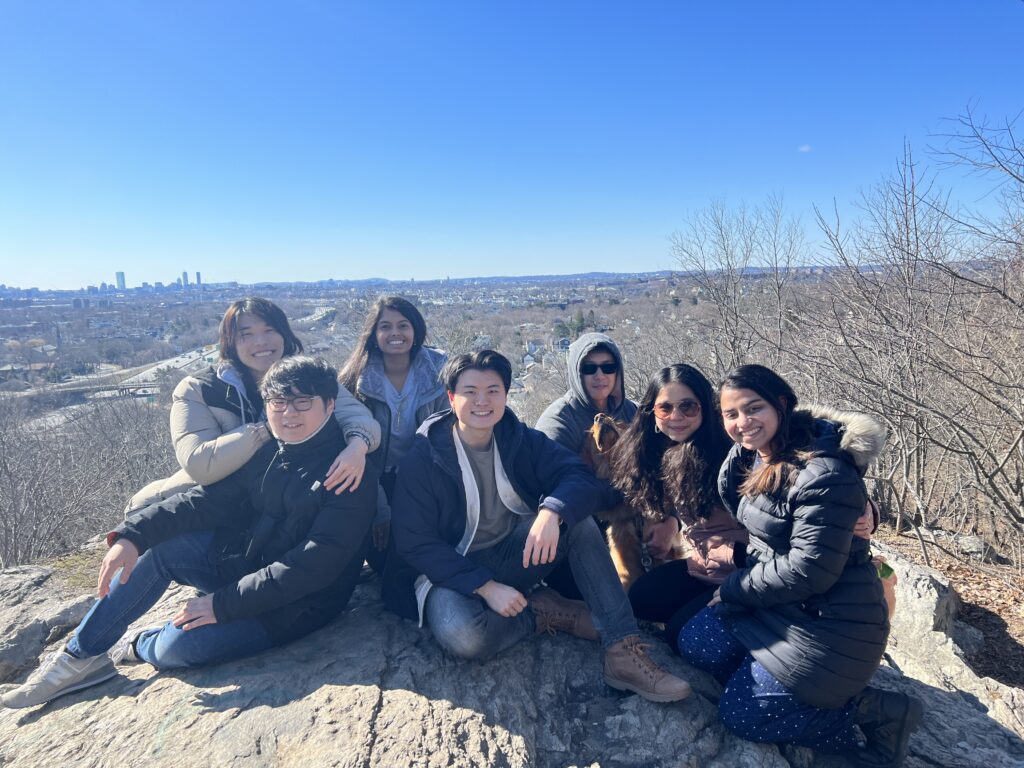
Anishka: That sounds so fun. I love Boston. Earlier, you mentioned you were from Chicago. How was that transition to Baltimore?
Ria: In terms of transition, I would talk to juniors and seniors around campus early on. The biggest piece of advice they gave me was to buy rain boots because it rains a lot in spring and fall. Coming from Chicago, the cold wasn’t a big adjustment, and Baltimore doesn’t get as cold.
Otherwise, everybody is coming from all over the world and everyone’s adjusting to a new place together. It makes it easier because it’s all a new experience for us.
In terms of exploring Baltimore, the biggest thing was that all the free transportation made it so easy.
There are so many nice neighborhoods. My favorites were definitely Mount Vernon. One of our friends was double majoring at Peabody, which is the music school, so we would travel down to the Mount Vernon area, and I got to see his live solo performance. There are a lot of great cafes and food options around.
Hopkins has their own bus, so you can take it down to Mount Vernon where Peabody is, and you can take it over to the med school and the hospital. A lot of people volunteer there and get very involved down at the med school campus, which is really nice and very accessible.
Inner Harbor and Fells Point are also very popular—great food options, especially by the water.
My other favorite spot was Towson. The Collegetown Shuttle connects different colleges in Baltimore. Pretty often we’d go up to the Towson area, hang around the mall, and eat—there’s a lot of great food up there too.
Occasionally we would go to DC, especially cherry blossom season in March. It’s very easy to get to Penn Station and then take a train wherever you want.
Anishka: We try to go down to DC for the cherry blossoms every year as well. It’s very crowded, but honestly worth it because the blossoms are so pretty and they’re everywhere.
Shifting back to academics, you came in knowing you want to be pre-med and obviously for BME you have to apply BME. Did you get the chance to explore different disciplines or take random classes?
Ria: I applied BME initially because I love math, science, chemistry, and physics. I couldn’t really pick one field, and with engineering, you can do everything. It’s very application-based, so I really like that.
I’m very fortunate that I got into BME here. It’s incredible. Coming in, I was interested in pre-med, but you have to do a lot of things to explore the different options and where you can go from here. I wasn’t 100% sure I was going to do medicine. I was considering it—let’s see how this pans out—and plan accordingly to see if these experiences resonated with me.
For BME, the big things are going down the PhD/research/academia route. Getting involved in a lab early on, I got to see what it looks like to be a PhD student, and the kinds of interests and things people engage in. That resonated with me, and I really enjoyed research. It was a great experience, and you have to keep doing it even in medicine. But for me, the biggest thing was that I really valued was the human interaction and human connection.
There are a lot of different ways to make impacts on patients. The lab I was working with was working on neurodegenerative diseases like Parkinson’s and dementia, and there are very important clinical applications. But these things take years and years—you’re putting years of your life into this work. You don’t get that immediate gratification of, “I’m helping this patient at this very moment,” but you know your work has long-term positive outcomes.
Other than the academia/PhD route, you can go into industry—more hard engineering—or consulting using the engineering background. Design Team was something I got very engaged throughout my four years. I got to see the hard-engineering side: working with different professionals, learning different skills—I got to do CAD, I got to 3D print a lot of stuff. There’s laser printing, and we have a lot of great resources in our Design Studio. I also got to see a bit of the business side by applying to different business pitch competitions and earning funding for our project. I learned to think about engineering from an entrepreneurship angle.
Those were really cool experiences, but I kept being drawn back into medicine because of how much I enjoyed directly interacting with patients.
Unfortunately, COVID hit during my time, so I wasn’t able to volunteer at Johns Hopkins Hospital. I think now a lot of people are very involved in the hospital. I volunteered at the University of Maryland Medical Center, which was close by and easily accessible by bus. That’s where I got a lot of my clinical experience. I also volunteered at emergency departments and vaccine clinics around Chicago. That helped center me into why I ended up in medicine.
The only thing I didn’t get to do, which a lot of my friends did, was internships, because early on I figured out I wanted to go down the medicine route. But my other friends did internships throughout their first, second, and third year, so I know there are a lot of great resources and opportunities in that direction as well.
And there are just so many random cool things to explore on campus. I had a friend who was a research-centered bio major and randomly joined the Bat Lab. I was like, “How did you get involved?” And he goes, “I don’t know, I thought it was pretty interesting. I just wanted to see what kind of research they’re doing.” Completely unrelated to what he wanted to do, but it was a really cool experience.
Anishka: Yeah, I’ll uncover random things just by walking around. Your year they called it SOHOP—now they have a program called Blue Jay Days. They had students tour different labs, and I was stationed at one lab called the Dog Lab. I was confused about what that meant. It’s in Ames, and they bring in community dogs and do testing—obedience testing. I didn’t know we had this.
Ria: That’s awesome. You know what I did a lot in college? I participated in studies—earned a little extra cash—and got to see what kind of research they’re doing. It was a lot of psych experiments, playing games, but it was really fascinating.
Anishka: Yeah. I also did one with psychology because my friends were in neuroscience. They would zap your brain.
Ria: I heard about this one.
Anishka: They would find your motor cortex and your finger would move. I was like, “I’m not even moving my finger.”
Ria: It’s a real thing they do in psychiatry treatments—they zap certain parts of your brain. It’s fascinating. I had a friend who did a study over at the med school where they drank different flavors of milkshakes in an MRI, and they looked at brain activity. I was like, “This is so fascinating.”
Anishka: I think we’re nearing the end, and I know you’re busy, so I don’t want to keep you. Is there one last story or advice you have for prospective students?
Ria: I think the most important thing is staying true to yourself. What do you want to get out of your college experience? It’s very easy to see what everyone else is doing, but you want to stay true to yourself and truly explore everything that college has to offer.
Maybe you come in and say, “This is exactly what I want to do,” but give yourself opportunities to explore beyond that, because you never know—there’s something else that might interest you.
Similarly, if you’re undecided, college is a great time to explore. Take random classes. You [generally] don’t have to declare a major until your sophomore year, so you have plenty of time to explore and see what’s out there. Get involved in the clubs you want to. It can be for fun—dance teams, singing teams—something to keep you rejuvenated outside of academics.
Get involved in research, maybe something you never thought you’d do, as a way to learn more about that field. Any experience you do is going to benefit you. You can do a bunch of random things and gain different skills and experiences from those opportunities. College is your time to explore, so I 100% endorse that. Don’t let anybody pressure you or force you to think in a certain way. Do what you think is best for yourself.
Anishka: That’s great advice. For Blue Key, we talk to prospective students and they ask, “What advice do you have for high school students?” That’s the exact same thing I say. Hopkins has so much to offer—don’t be scared to try anything you want.