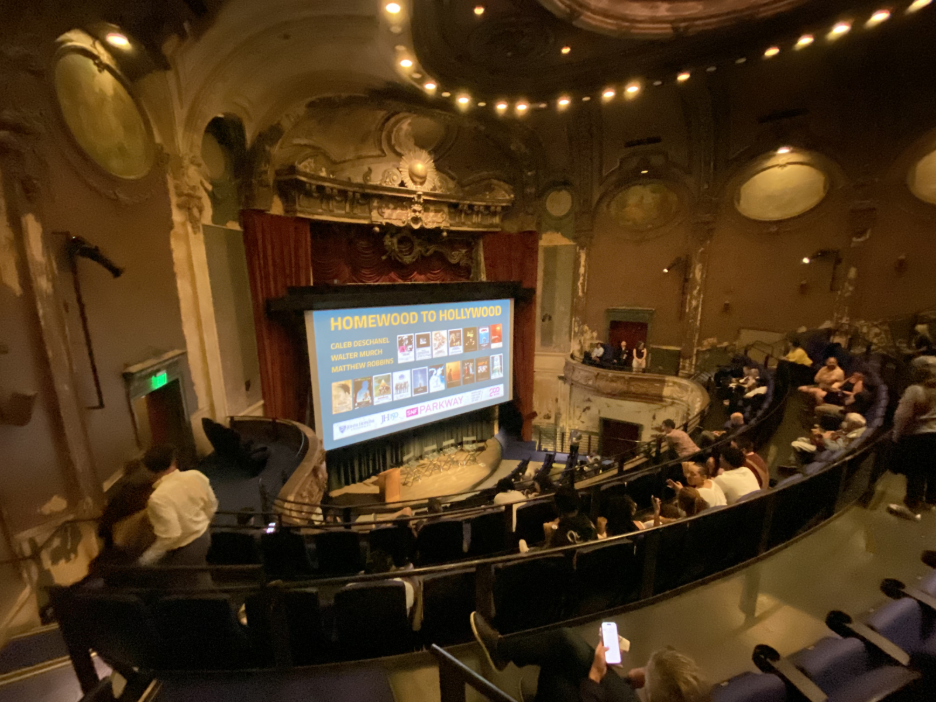
There’s something surreal about sitting in a movie theater and hearing the stories of the people who helped build a culture that made this night possible.
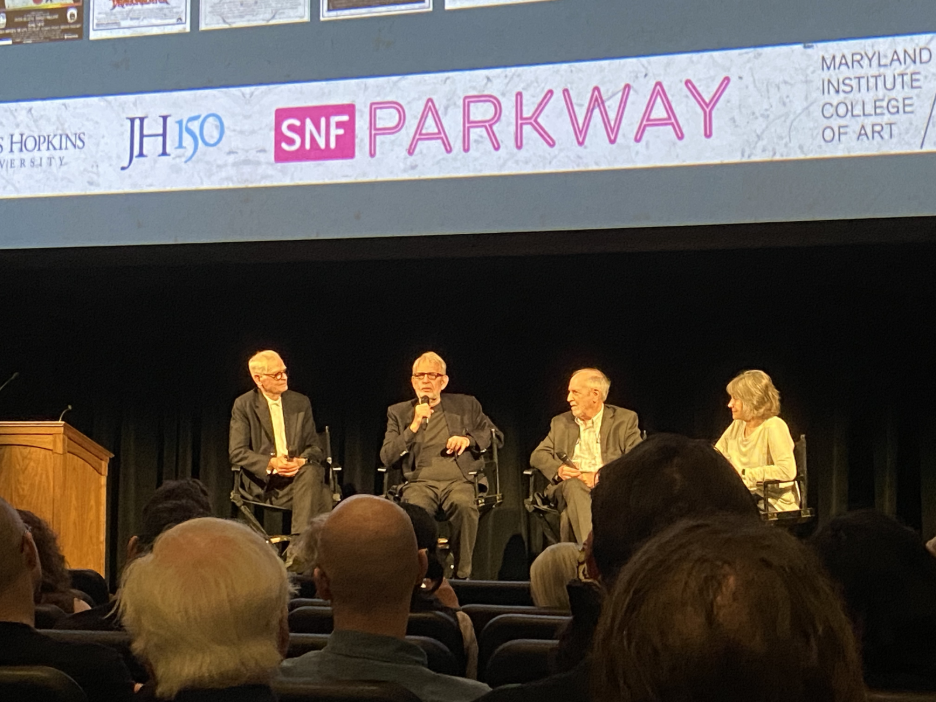
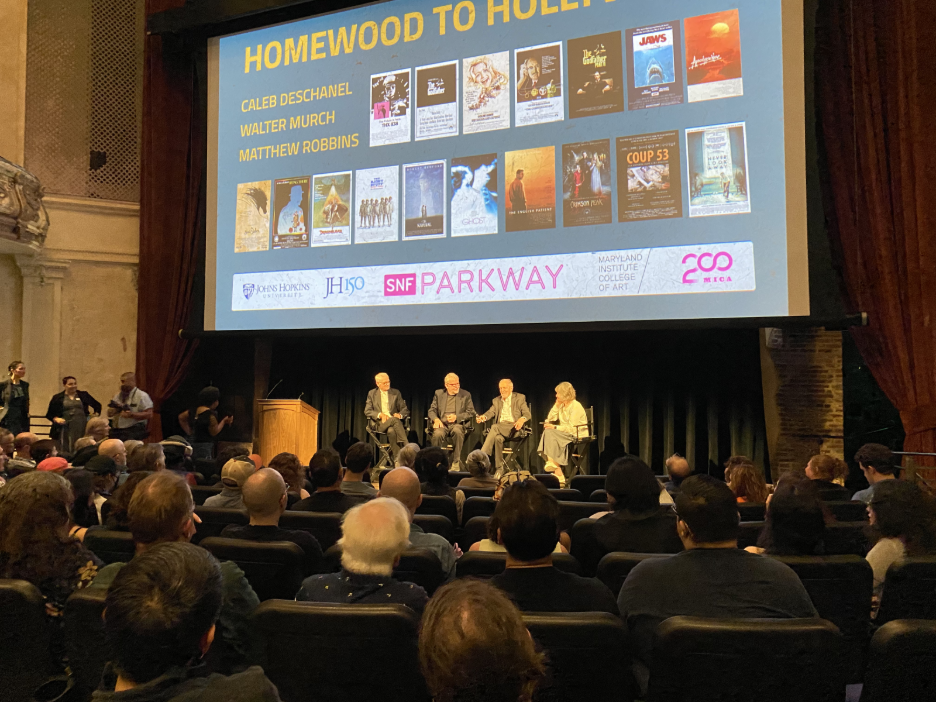
On April 16, the Johns Hopkins Film and Media Studies program hosted three distinguished alumni at the Parkway Theatre for “From Homewood to Hollywood: A Conversation with Filmmakers,” a conversation with director and cinematographer Caleb Deschanel, director, editor, and sound designer Walter Murch, and director and screenwriter Matthew Robbins, moderated by Teaching Professor Linda DeLibero. The event was held in celebration of Hopkins’ 150-year and MICA’s 200-year anniversary, and there couldn’t have been a better way to mark it.
Between the three of them, they’ve accumulated 15 Academy Award nominations, three wins, and credits that include “Apocalypse Now,” “The Godfather,” “Jaws,” “Close Encounters of the Third Kind,” and “The English Patient,” among 100 others. Matthew Robbins even wrote Steven Spielberg’s first feature film. And their footprints don’t end at Hopkins. They’re part of the New Hollywood movement of the 1970s, a generation of filmmakers who changed what cinema could be.
But what struck me most wasn’t the accolades. It was hearing where it all started.
Long before Film and Media Studies was an official major at Hopkins, these three were essentially its forebears. It was thanks to forward-thinking professors that they got to take a film-focused trip to Paris during the French New Wave movement, and something clicked. They learned the depth of cinema, and it became more than just something they enjoyed. It was something they wanted to do.
From there, they went on to USC, which at the time had a film program of 80 people, which was up from 40 the year before. During orientation, one of their teachers looked out at the entire class and told them it wasn’t too late to turn back. They didn’t. Instead, they learned everything: sound, lighting, camera operation, all of it. All three credited that total immersion with making them the filmmakers they are today. A lot of their early work was guerilla filmmaking, scrappy, resourceful, deeply collaborative, because when you don’t have much, you lean on the people around you and your capabilities to learn it all.
Hearing that made me genuinely grateful. I’m sitting here pursuing a minor in a top-20 film program that didn’t even exist as a major when these three were students here not so long ago. Because of people like them, students today get to focus on filmmaking in the ways it speaks to them most, whether that’s cinematography, sound design, directing, whatever. That kind of specialization only exists because people worked hard to build that infrastructure for it first.
If you’re a Hopkins student even remotely interested in film, pay attention to what the Film and Media Studies program puts together. Nights like this one don’t come around often.
Walter Murch, who is credited with essentially inventing cinematic sound design, put it in a way that’s resonated with me. He described cinema as an emotional microscope, a way of putting a lens on human feeling that no other art form can quite replicate. And that cinema is the only art form to choreograph silent human thought. I’ve been sitting with that one ever since.
It’s the kind of thing that reminds you why cinema is so important in the first place. And if filmmaking speaks to you, thanks to these three, one of the best paths to follow is already paved, right here at Hopkins.