In high school, I never really considered engineering as one of the key focal points of my college education. Yet, here I am, a rising junior in computer science at Hopkins, loving every minute of my education. Over the last two years, I have noticed that this engineering mindset has trickled more into my everyday life.
By the end of my first year, without even realizing it, I had started using engineering projects to make custom tools to solve my own non-engineering and non-academic roadblocks.
Here’s how:
1. Making a catch-all app for my lifestyle: Life Autopilot
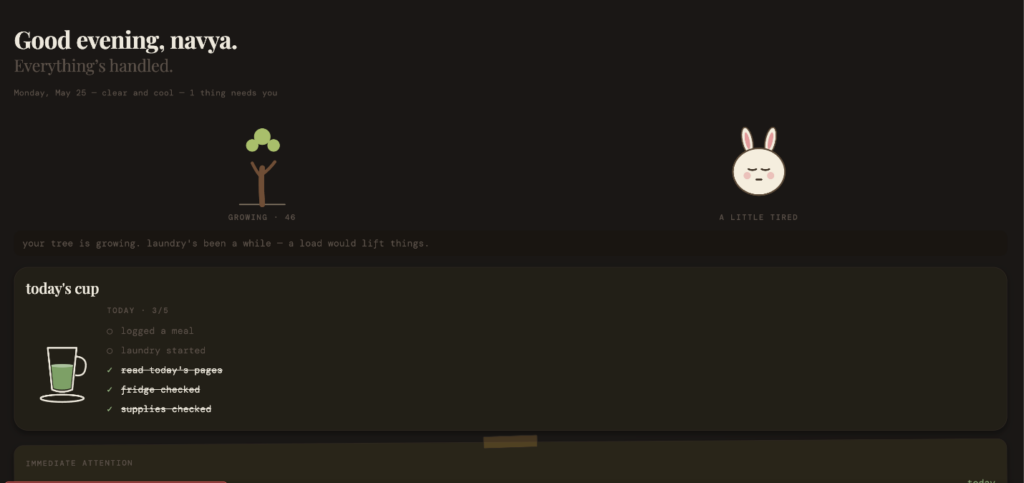
For me, college was my first time living away from home and having to think independently about tasks like cooking and groceries. These are definitely not my favorite things to do and I would much rather spend time reading, hanging out with friends, or even completing homework. As a result, I found myself deprioritizing this a lot. A couple of semesters in, I knew this had to change. So, I solved this problem the only way I knew how. I decided to build an app. Introducing: Life Autopilot! A catch-all tool for everything in my life that is not academic, extracurricular, or social.
This app tracks my meals and suggests a full weekly meal plan every Sunday along with a ready-to-go DoorDash order for all my groceries (I just need to tap and approve the order, and there you go, it’s at my doorstep). Another problem I noticed was that earlier, even when I was doing my groceries, I would often keep fruits at the back of my fridge and forget about them, only to find them all spoilt a few days later. So, my app also notifies me before anything in my fridge is about to go bad. It manages all this while taking into consideration my preferences (like dietary restrictions) and also learns from my eating habits and behavior over time.
And yes, it does handle other things like laundry and wellness reminders. Of course, I built a Tamagotchi and refillable matcha cup animation to make it fun.
2. Making my own flashcard app – Flipside
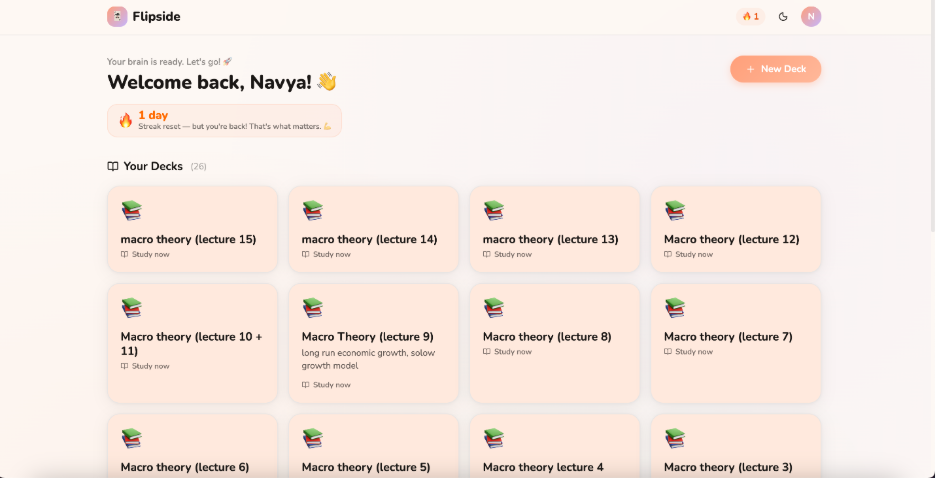
Active recall and spaced repetition are among the absolute best ways to prepare for midterms and finals (speaking from experience!). Active recall is when instead of just reading the material, you quiz yourself on it. Spaced repetition is when you increase the period between repetitive reviews of material. Now, many students at Hopkins use apps like Anki cards and Quizlet to do this. However, I found that I didn’t like that I couldn’t access all my cards at once in Anki, and Quizlet did not have built-in spaced repetition.
So, I decided to build my own flashcard app for my own personal use called FlipSide. I made it so that it includes a lot of these smart study techniques but also things that work well with my own workflows like specific custom keyboard shortcuts. This little project means that studying for tests is now a lot more organized for me.
Try it at this link.
3. Making my own opportunity search tool – Internship Intel
Internships are a huge part of practical learning in college, and the application process can last several months. In addition to just internships that are posted on job boards, a lot of other opportunities like grants, fellowships, and award applications are posted on LinkedIn and X. I wanted to regularly apply to internships and other opportunities, but typical job boards wouldn’t show me things that catered to my requirements.
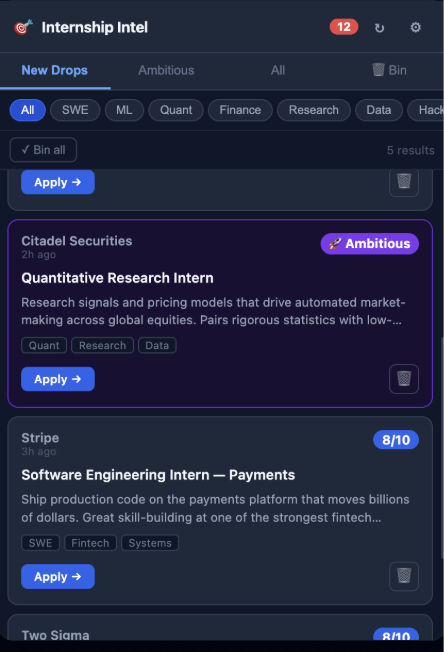
For example, a lot of internships have strict year or experience requirements. So, I decided to build a Chrome extension that suggests new opportunities every day. For example, I told the AI in my tool that I am a sophomore computer science and economics major, so it suggests only those opportunities that require this profile. Moreover, applying as soon as internships are posted is super important, so my tool also notifies me when opportunities are posted so that I can apply right away.
4. Making a GitHub streak tracker
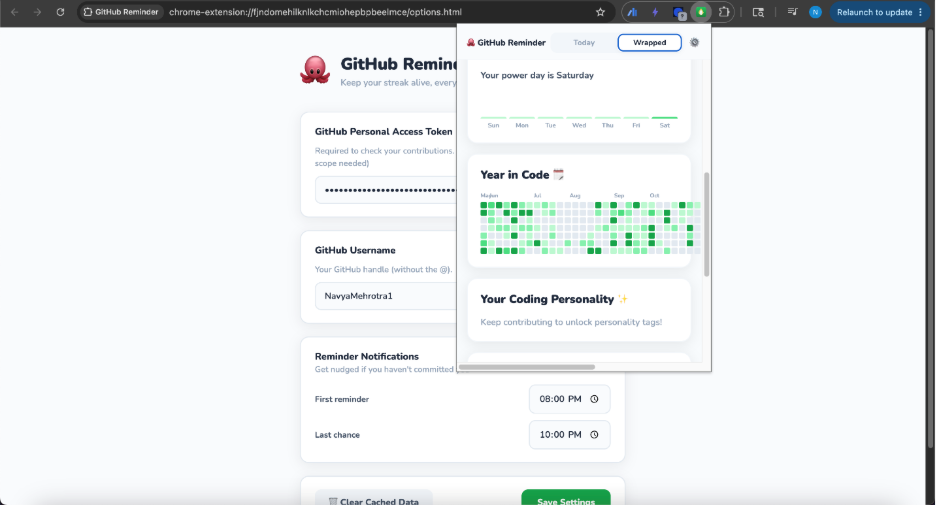
While I was making all of these projects, I used GitHub to track my progress (GitHub is a developer platform that allows you to store and manage your code). Each person’s profile has a calendar with activity streaks on them. While making all the projects I mentioned before, I got obsessed with trying to maintain and grow this streak. But I would often forget about committing my changes for the day to GitHub. So, I made my very own GitHub streak reminder and tracker. This reminder Chrome extension has a cute little octopus (not sure why I picked an octopus here hehe) that reminds me every day to maintain my GitHub streak.
Over the past year, I have absolutely loved making these projects. I didn’t make these projects for my resume, an internship, or a class. I just made them to solve my own little problems. I already have many ideas for my next apps, including trying to venture into more hardware-oriented projects. When you’re in an engineering program like the ones at Hopkins, this mindset of building something new just becomes your first instinct when faced with a challenge. I’m so excited to keep building.